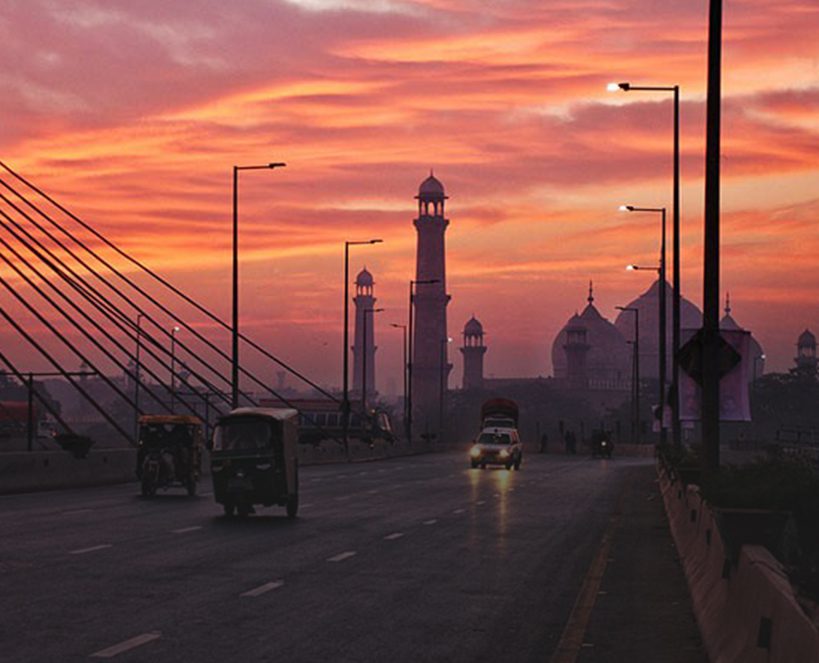


Between Instability and Interdependence: India–Bangladesh Relations after 2024
India–Bangladesh relations are undergoing a period of pronounced stress, shaped by political transition in Dhaka, rising societal tensions, and growing strategic uncertainty in the region. While institutional cooperation between the two countries remains intact, the political and societal dimensions of the relationship have come under renewed strain. The killing of Sharif Osman Hadi, a prominent youth leader and prospective independent candidate in Bangladesh’s first post-2024 elections, has heightened domestic instability and raised concerns about the trajectory of the political transition. Simultaneously, the lynching of Dipu Chadra Das, a Hindu factory worker in Bangladesh, over alleged blasphemy has triggered protests in India, injecting communal sensitivities into the bilateral discourse.
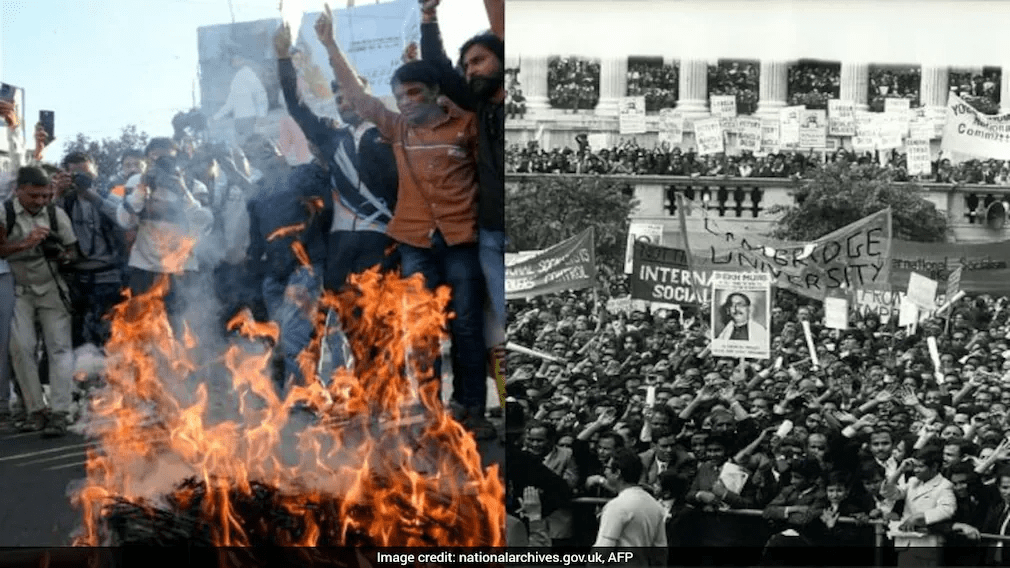
The reported killing of at least 11 members of the Hindu community in Bangladesh over a 35-day period points to a pattern of targeted violence. As violence surges in Bangladesh, it has led to erosion of trust, underscoring the vulnerability of India-Bangladesh ties. Protests in India over violence against Hindu minorities in Bangladesh, combined with Dhaka’s position on former Prime Minister Sheikh Hasina, have brought latent frictions in the bilateral relationship to the surface.
Yet the current phase of tension cannot be understood solely through the lens of recent events. It reflects the interaction of immediate political crises with deeper, unresolved structural issues embedded in the history of partition, war, and post-independence state-building. Migration, minority security, and identity politics have repeatedly resurfaced as fault lines in bilateral relations, particularly during moments of political transition or regional instability.
This analysis situates the present crisis within the broader historical evolution of India–Bangladesh relations, tracing how legacies of displacement, migration, and contested narratives since 1971 continue to shape contemporary policy debates. By examining both the economic and strategic implications of the current tensions, it assesses the prospects for stabilisation and recalibration, and argues that sustainable engagement will depend on historically informed, politically sensitive, and cooperative approaches rather than reactive responses to episodic crises.
Historical Context: From Liberation to Partnership
During the post-1971 period, India–Bangladesh relations were often described as unique in South Asia. India’s decisive role in Bangladesh’s liberation laid a foundation of goodwill, reinforced by shared history, linguistic and cultural ties, and geographic interdependence. Despite limited resources, Bengalis, particularly students and youth, mobilised in resistance, while widespread atrocities forced nearly 10 million civilians, mainly women and children, to seek refuge in India.
India’s response during this period was marked by sustained diplomatic, logistical, and moral support for the Bangladeshi cause. While carefully managing the risks of escalation, India balanced restraint with a sense of regional responsibility. The decision to intervene militarily in December 1971, following Pakistani attacks on Indian territory, decisively altered the course of the conflict and culminated in the emergence of Bangladesh as an independent state.
This experience embedded a deep reservoir of goodwill that shaped bilateral ties for decades –
- Steady growth in trade and energy partnerships;
- Cross-border connectivity projects enhancing physical and economic integration;
- Close coordination on counter-terrorism and border security.
By the early 2020s, bilateral relations were frequently described as entering a “golden era.” Trade volumes expanded, transit and transport agreements facilitated smoother movement of goods and people, and joint security cooperation deepened institutional trust. Regular high-level political engagement and alignment in regional and sub-regional forums further reflected a convergence of strategic interests. Although differences over water sharing, trade imbalances, and border management persisted, these issues were administered mainly through dialogue, underpinned by political alignment and pragmatic engagement.
Political Transition and Bilateral Dynamics
During The mass student-led uprising in Bangladesh in 2024 marked a decisive turning point. The removal of Prime Minister Sheikh Hasina, who had been closely associated with stability in India–Bangladesh relations, disrupted established political and diplomatic channels. Under Hasina’s leadership, cooperation on sensitive issues, particularly counter-terrorism, connectivity, and regional integration, had deepened significantly, aligning closely with India’s strategic interests.
Beyond the immediate rupture in leadership, the upheaval has introduced deeper uncertainties into Bangladesh’s political landscape, particularly concerning electoral realignments. The Awami League’s support base represents a substantial segment of the electorate, and its political displacement raises questions about voter absorption and representation in a post-Hasina context. The potential return of the Bangladesh Nationalist Party (BNP) and the possible reassertion of Jamaat-e-Islami within broader political coalitions carry implications not only for domestic governance but also for Bangladesh’s external orientation. Historically, periods of BNP-led government have coincided with more strained relations with India, shaped by differing approaches to regional security, minority rights, and cross-border issues. While outcomes remain uncertain, the redistribution or marginalisation of Awami League voters could significantly reshape political incentives and policy priorities.
The treatment of figures such as Muhammad Yunus, who is internationally respected yet domestically contested, highlights how internal political struggles in Bangladesh are increasingly shaping its external posture. This dynamic has attracted international scrutiny and strained diplomatic bandwidth at a particularly sensitive juncture. Against this backdrop, Bangladesh’s general elections scheduled for February mark a critical juncture in the country’s political transition. As the first national polls since the 2024 uprising, they will test the interim authorities’ ability to restore political legitimacy and institutional continuity. Persistent concerns over inclusiveness, electoral security, and political participation have increased domestic and international focus.
For India, the elections carry clear strategic implications. A credible and broadly accepted outcome could restore predictability in Dhaka and enable diplomatic stabilisation. A contested or fragmented result, by contrast, risks prolonging uncertainty, reinforcing nationalist narratives, and further complicating efforts to recalibrate bilateral engagement amid heightened regional sensitivity.
Hasina’s departure from Bangladesh in August 2024 and her subsequent residence in India have since become a focal point of bilateral tension. For Bangladesh’s interim leadership, India’s decision to host Hasina has been perceived as implicit political backing for a former regime that is now widely contested in domestic discourse. This perception has fuelled accusations of interference and is viewed as a source of diplomatic friction.
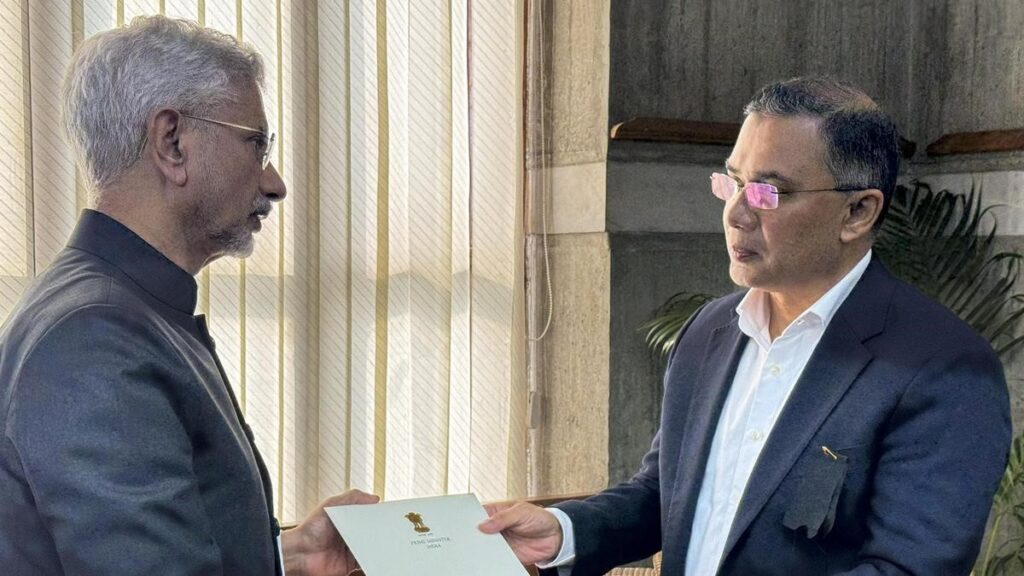
From India’s perspective, the situation is more nuanced. New Delhi has characterised Hasina’s stay as a personal decision, emphasising that her long-term presence in India is determined by her own choices rather than Indian state policy, as clarified by External Affairs Minister Dr. S. Jaishankar. India’s cautious posture reflects an attempt to balance non-interference with the preservation of long-standing strategic interests. However, this calibrated approach has also resulted in a perceptible slowing of diplomatic engagement, reinforcing perceptions of distance at a critical juncture.
Multidimensional Impact on the India–Bangladesh Relationship
This diplomatic distancing is visible across political, economic, societal, and strategic domains. Diminished high-level engagement has eroded trust, narrowed crisis-management channels, and heightened the political costs of compromise, while economic uncertainty has slowed trade and connectivity, affecting both Bangladesh’s growth and India’s northeastern states. Strategically, a cooling relationship risks creating space for external actors to exploit emerging fault lines, undermining hard-won regional stability. Some of the impacts are as follows:
- Societal Impact: Societal and communal tensions have increasingly spilt over into the bilateral relationship, heightening political sensitivities. Incidents of violence against Hindu minorities in Bangladesh have elicited strong reactions in India, where minority protection in the region resonates deeply as both a constitutional obligation and a moral responsibility. These concerns are further magnified by domestic political narratives that frame regional developments through civilisational and historical lenses. Bangladesh, in turn, has contested what it views as exaggerated or politicised portrayals in Indian media and political discourse. Dhaka argues that such narratives inflame public opinion and undermine confidence. Media coverage in both countries often amplifies isolated incidents or presents one-sided interpretations, shaping public perception and constraining diplomatic flexibility. This feedback loop has made compromise politically costly, reinforcing hardened positions on both sides.
- Economic Impact: Bilateral trade, which had been expanding, has slowed amid uncertainty. Disruptions to rail and road connectivity have affected supply chains, especially in India’s northeastern states, which rely on transit through Bangladesh. Negotiations on deeper economic integration, including a free trade agreement, have stalled, threatening growth and investment in both countries.
- Geopolitical Impact: Strains in India–Bangladesh relations are unfolding amid intensifying great-power competition in South Asia and the Indo-Pacific. Bangladesh’s efforts to diversify external partnerships, including expanded cooperation with China, have raised concerns in India, given Dhaka’s proximity to India’s northeastern corridor and critical regional connectivity routes. The United States is also closely monitoring developments as part of its broader Indo-Pacific strategy. US engagement with Bangladesh on democratic governance, human rights, and maritime security intersects with existing bilateral sensitivities. Periodic US commentary on internal political developments in Bangladesh, while normatively framed, risks internationalising bilateral frictions and complicating neighbourhood diplomacy. If tensions persist, they may create strategic space for external actors to deepen influence at the expense of bilateral mechanisms. For India, sustained engagement with Bangladesh is essential not only for managing immediate challenges such as migration and border security, but also for preserving regional stability by preventing geopolitical fault lines from hardening in an increasingly contested strategic environment.
- Structural Friction: Long-standing issues such as water-sharing on the Teesta River, border management, migration, smuggling, and sporadic violence remain unresolved, with resolution dependent on political goodwill, currently in short supply.
Together, these societal, economic, and geopolitical dimensions underscore that migration-related tensions do not operate in isolation. Instead, they intersect with deeper structural and strategic dynamics, reinforcing the need for calibrated, historically informed, and forward-looking engagement between India and Bangladesh.
Future Prospects
Prolonged estrangement would serve neither country’s long-term interests, yet the current trajectory reflects a deeper dilemma confronting both New Delhi and Dhaka. Domestic political instability in Bangladesh and heightened societal sensitivities in India are increasingly colliding with the shared responsibility both states bear for regional stability. As internal pressures intensify, space for strategic patience and diplomatic flexibility has narrowed. Whether the February elections produce political consolidation or prolonged uncertainty will be a key determinant of both Bangladesh’s internal stability and India’s ability to recalibrate a relationship central to regional order.
At the heart of the present impasse lies a second considerable tension: the pull of short-term political imperatives versus the demands of long-term strategic interdependence. As a result, bilateral decisions are shaped by immediate domestic issues, such as electoral calculations, public sentiment, and media narratives. This dynamic potentially threatens years of carefully built cooperation. Yet geography, economics, and security realities continue to bind India and Bangladesh in ways neither can escape.
A sustainable path forward will require both governments to consciously separate transient political turbulence from long-term strategic interests. Restoring structured diplomatic engagement, reviving stalled economic and connectivity initiatives, and preventing communal issues from dominating bilateral discourse are not merely confidence-building measures; they are strategic necessities. Whether this period marks a lasting rupture or a recalibration will ultimately depend on the willingness of both sides to privilege regional responsibility over domestic expediency, and long-term stability over short-term political gain.