

ANANTA INSIGHTS
The Near Abroad | December 2025
This month in The Near Abroad, we examine how South Asia’s landscape is evolving. Sri Lanka faces a disaster exacerbated by climate change, Bangladesh deals with the aftermath of Hasina’s sentencing, and India maintains a cautious approach. Pakistan is restructuring its government through its 27th Amendment, while tensions along the Durand Line are intensifying. Throughout the region, nations navigate turbulence, transition, and delicate stability.
Sri Lanka After Cyclone Ditwah: A Storm That Turned Into a National Crisis
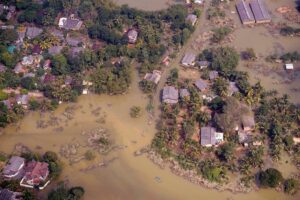
Image 1: Mapping the Initial Impact of Cyclone Ditwah in Sri Lanka.
Source: Geosmart/Vantor
Cyclone Ditwah made landfall on Sri Lanka’s eastern coast on 28 November 2025. What seemed like a moderate storm soon escalated into one of the most destructive disasters the island has faced in years. Days of relentless rain triggered severe flooding across lowlands and landslides in the hill country, overwhelming cities, towns, and rural communities. By early December, the human toll was staggering. Hundreds had died, many remained missing, and entire neighbourhoods were washed away. Updated figures show 638 deaths, 356 missing, and over 1.58 million people affected across all 25 districts, with more than 201,000 people displaced and sheltering in government centres. The cyclone caused extensive damage to over 41,000 homes, with the worst impacts reported in Puttalam, Colombo, Gampaha, and Mannar. Roads, bridges, power lines, and water systems were damaged or destroyed. In several districts, rescue teams struggled to reach survivors due to collapsed infrastructure and continuous rainfall.
The hill-country plantation zones were among the hardest hit. Landslides destroyed rows of homes and wiped out sections of farmland. Remote villages became inaccessible as roads crumbled or were buried under debris. For communities dependent on tea and agricultural labour, both income and security vanished overnight. Food supply chains were disrupted. Flooded farmland and eroded soil threaten agricultural output for months to come, raising concerns about food security nationwide.
The Sri Lankan government declared a state of emergency and urgently appealed for international assistance as Cyclone Ditwah unleashed widespread devastation. Military units, volunteers, and humanitarian agencies quickly mobilised to evacuate stranded residents, distribute food and clean water, provide emergency medical support, restore temporary shelters, and clear blocked roads to access remote communities. India commenced Operation Sagar Bandhu on 28 November 2025, positioning itself as the first responder in delivering immediate HADR (Humanitarian Assistance and Disaster Relief) assistance to Sri Lanka after Cyclone Ditwah.
International partners also stepped in with essential supplies, technical expertise, and financial aid, yet the scale of destruction is such that recovery will be long and complex. The cyclone exposed deeper structural vulnerabilities: Sri Lanka’s geographical position makes it highly susceptible to monsoon systems and cyclonic storms, and many communities are settled in flood-prone plains or on unstable slopes prone to landslides. Long-standing issues such as deforestation, soil erosion, poor land-use planning, rapid urbanisation, inadequate drainage, and ageing infrastructure further compounded the impact.
More broadly, the disaster underscored a troubling climate reality in which storm severity is increasingly driven not only by wind speed but also by extreme rainfall, prolonged storm duration, and erratic weather patterns. Adding to these challenges, Sri Lanka’s fragile fiscal position makes the task of rebuilding homes, repairing infrastructure, and supporting affected communities even more daunting.
As the country moves from emergency response to rebuilding, several priorities stand out:
- Humanitarian Relief: Shelters, healthcare, clean water, sanitation services, and psychological support for survivors remain immediate needs.
- Infrastructure Recovery: Damaged bridges, roads, water systems, and power networks must be rebuilt—not just replaced, but strengthened.
- Agriculture and Livelihoods: Farmers need help restoring flooded or eroded fields. Plantation economies require special support to prevent long-term unemployment and food shortages.
- Fiscal Management: The government must carefully balance reconstruction spending with the country’s fragile financial position.
- Climate and Disaster Preparedness: Early warning systems, resilient housing, and stricter land-use rules are essential to reduce future risks.
Cyclone Ditwah exposed the deep vulnerabilities of Sri Lanka’s environment, infrastructure, and social systems. But it also offers a chance to rebuild with resilience. A forward-looking recovery plan that integrates climate adaptation, community preparedness, and sustainable development is essential. International cooperation will help, but lasting resilience must be grounded in local needs and strong institutions. The road ahead will be demanding. Yet with coordinated efforts from the government, humanitarian partners, and communities, Sri Lanka can rebuild in a way that honours the lives lost and protects those who remain.
Hasina Sentenced in Absentia: India Balances Caution and Continuity
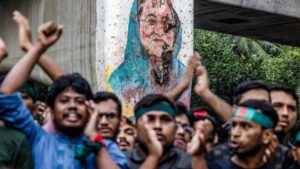
Image 2: Students chanting slogans near a vandalised mural of Bangladesh’s ousted Prime Minister Sheikh Hasina, at the capital city on 12 August , 2024 | Photo Credit: LUIS TATO/AFP
On 17 November 2025, the International Crimes Tribunal (ICT) convicted former Bangladesh Prime Minister Sheikh Hasina of crimes against humanity and sentenced her to death in absentia. The charges stem from the 2024 student-led uprising and the violent response by security forces. The Tribunal held her responsible for incitement, unlawful orders, and failing to prevent large-scale abuses. Hasina left Bangladesh in August 2024 during the unrest and has been living in India since then. After the verdict, she rejected the charges and called the Tribunal “rigged,” said she was denied a fair chance to defend herself, and accused the interim government of using the process for political ends.
India’s response has been cautious. The Ministry of External Affairs (MEA) said it has “noted the verdict” and did not comment on the fairness or legitimacy of the ruling. Instead, it stressed constructive engagement with all sides in Bangladesh. New Delhi has also avoided taking a firm position on Dhaka’s request to extradite Hasina. External Affairs Minister Dr. S. Jaishankar has stated that Hasina’s stay in India is a “personal decision.” India, while remaining supportive, emphasises that her long-term presence in India will be determined by Hasina herself, not by the host government.
Inside Bangladesh, reactions remain sharply divided. The interim government led by Muhammad Yunus welcomed the decision, calling it important and symbolic. For many families affected by the violence, the ruling represents long-awaited accountability. It is seen as a rare break in a long pattern of impunity. But critics question the fairness of the process. They argue the trial was rushed, politically influenced, and designed to remove Hasina and her party, the Awami League, from the political arena. Concerns about due process and trials in absentia continue to dominate the public debate.
For India–Bangladesh relations, the moment is delicate. India’s neutral posture is intended to preserve stability and avoid interference. Declining to commit to extradition protects India from being implicated in political retribution, but it also risks creating friction with Dhaka. India’s focus remains on continuity in trade, connectivity, and cross-border cooperation. Regionally, the case reflects broader South Asian struggles between accountability, political transition, and stability.
The Hasina verdict is both a legal and political watershed. It raises questions about justice, due process, and the balance of power during transition. India’s restrained approach shows its desire to avoid taking sides while managing a sensitive relationship with its neighbourhood. The coming months will reveal whether Bangladesh can move toward stability and reconciliation, or whether the ruling will harden divisions at an already volatile time.
Governance at a Crossroads: Implications of Pakistan’s 27th Constitutional Amendment
Pakistan has entered a period of significant constitutional transition, marked most recently by the passage of the 27th Constitutional Amendment on 13 November 2025. The amendment introduces structural adjustments across the judiciary, the defence establishment, and federal–provincial relations, sparking wide-ranging debate about its long-term implications for governance. Even as these changes take shape, discussions are reportedly underway on additional amendments that may further alter the distribution of power within the State.
A central feature of the 27th Amendment is the establishment of the Federal Constitutional Court (FCC), a new body mandated to interpret constitutional matters previously handled by the Supreme Court. While the Supreme Court continues to function, its jurisdiction now intersects with the FCC in ways that supporters believe will create greater clarity and efficiency. Critics, however, view this shift as reducing the Supreme Court’s oversight role and potentially weakening judicial independence. The amendment also revises procedures for appointing and transferring judges, a move the government frames as improving administrative flexibility but which detractors fear could expose the judiciary to political pressure. The resignation of two Supreme Court justices shortly after the amendment’s passage underscored these concerns.
Another major component of the reform package is the reorganisation of Pakistan’s military leadership structure. The roles of the Chief of Army Staff and the Chief of Defence Forces have been merged, while the post of Chairman, Joint Chiefs of Staff Committee, has been abolished. Proponents argue that the new arrangement streamlines command and enhances strategic coordination. Analysts caution, however, that the concentration of authority in a single office may alter traditional civil–military balances, particularly as certain senior military positions now carry provisions for extended privileges and conditional immunity from prosecution. Supporters contend these measures protect individuals who have held sensitive national-security roles, while critics see risks for accountability.
Debate also continues around the potential impact of these changes on federal–provincial relations. Each province has an equal number of seats in the FCC. Leaders present this as a major correction. Still, analysts say future amendments could alter funding, shift responsibilities, or redraw provincial boundaries. How these discussions evolve will shape perceptions of whether authority is being redistributed or recentralised.
As Pakistan enters a new constitutional phase, the 27th Amendment is viewed alternately as an effort to modernise governance or as a step that may concentrate power in the hands of very few. Much will depend on how institutions interpret and implement the reforms in the months ahead, and how effectively checks and balances are maintained.
Rising Tensions on the Durand Line: What’s Driving the Crisis
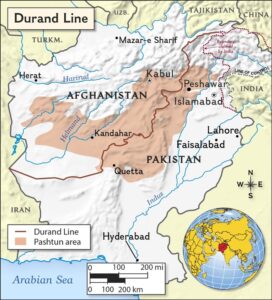
Image 3: The Durand Line was the result of an 1893 agreement between Sir Mortimer Durand, a secretary of the British Indian government, and Abdur Rahman Khan, the emir of Afghanistan.
Map courtesy: The National Geographic Society
Tensions between Afghanistan and Pakistan have risen sharply in recent months, creating concern across the region. The Afghanistan–Pakistan standoff is not just a border dispute. It is a multi-layered crisis shaped by political instability, internal security challenges, and long-standing mistrust. Without meaningful diplomatic and institutional efforts, the situation could escalate further. But with restraint, dialogue, and cooperation, both countries still find a way to reduce tensions and work toward long-term stability.
The situation is driven by several overlapping factors: shifting power dynamics within Pakistan, rising militant activity, and long-standing distrust between the two neighbours. Together, these developments have pushed the relationship into a more uncertain and dangerous phase.
One major change is the growing influence of Pakistan’s army leadership. As the military takes on a larger role, the balance between civilian and military authority appears to be shifting. This has happened at the same time that Pakistan’s internal security problems have become more serious. Militant groups have carried out repeated attacks, putting pressure on the State and raising questions about the effectiveness of its security strategies.
Cross-border attacks, air strikes and repeated border closures have worsened the situation. Both Afghanistan and Pakistan already struggle with weak institutions, limited rule of law and fragile governance. In such circumstances, even minor incidents can escalate quickly. When mistrust is deep and communication channels are narrow, misunderstandings or local clashes can spark a wider crisis. This is why many believe that if diplomatic intervention does not take place soon, the situation could worsen in unpredictable ways.
A key driver of the crisis is Pakistan’s difficulty in restraining militant groups within its borders. Groups such as the Tehrik-e-Taliban Pakistan (TTP) and various separatist movements have carried out attacks that directly challenge Pakistan’s security forces. These attacks have created frustration and anger within Pakistan and led to the belief in certain sections of the security establishment that Afghanistan may be providing space, knowingly or unknowingly, for militants to operate. Afghanistan has rejected these claims, and there is no clear evidence to support them fully. The uncertainty itself, however, fuels suspicion.
Rather than concentrating mainly on resolving internal issues, Pakistan’s military leadership has increasingly adopted a confrontational approach externally. This includes strong public statements, warnings, and even the use of force. One of the most notable examples was an air strike on Kabul in October 2025 after a series of militant attacks inside Pakistan. Soon after, Pakistan closed several key border crossings, halting trade and movement. Since Afghanistan relies heavily on trade routes via Pakistan, these closures had major economic consequences, affecting markets, businesses, and the border communities.
Earlier, peace efforts were attempted through regional diplomacy. A ceasefire was negotiated, and talks took place in Doha and Istanbul in October 2025. For a brief period, there was hope that a political process would reduce tensions. However, disagreements over sensitive political issues, including the status of the border, led to the talks collapsing. Once the dialogue broke down, cross-border firing resumed, and both sides braced for further escalation.
There are significant humanitarian, political, and economic consequences at stake –
- Violence can easily spread, especially in areas where displaced people, refugees or border communities already face hardship. Trade disruptions harm small businesses and daily-wage workers who depend on open borders for survival. When borders stay closed for long periods, the humanitarian burden increases sharply.
- Politically, Pakistan faces the risk of further erosion of democratic norms as military influence grows. Afghanistan’s governing structure, already strained, could weaken further if conflict deepens. When institutions on both sides are fragile, managing crises becomes much harder.
- Economically, instability damages livelihoods and breaks supply chains. Families living near the border are among the first to feel the impact. Refugees and vulnerable groups face increased uncertainty and fewer safety nets.
There is also the danger of a cycle of proxy conflict. If militant groups take advantage of the situation, Pakistan could experience more internal attacks. Afghanistan, in turn, may face retaliation linked to any group operating from its territory. A pattern of accusations and counter-measures could trap both sides in long-term instability.
Considering the challenges are rooted in deeper structural issues—weak institutions, disputed borders, and complex security problems—bilateral talks alone may not be enough. A neutral regional or international mediator could help establish a more durable ceasefire, create mechanisms to monitor the border, and support humanitarian needs. Mediation could also ease political tensions and open space for dialogue. Several steps could help ease the situation: restarting talks with clear goals; reducing military escalation through monitoring mechanisms; addressing internal security weaknesses; reopening trade routes; and encouraging regional support for peace.
***
Further readings:
‘Mental health crisis looms in flood-hit areas, health experts warn’. (2025, December 10). Daily Mirror. https://www.dailymirror.lk/…/Mental-health-crisis-looms-in-flood-hit-areas-health-experts-warn/108-327453
‘Make upcoming election fair and historic, Yunus tells UNOs’. (2025, December 10). The Daily Star. URL: https://www.thedailystar.net/news/bangladesh/news/make-upcoming-election-fair-and-historic-yunus-tells-unos-4055196
‘Japan pledges stronger support for sustainable Rohingya response’. (2025, December 10). Dhaka Tribune. URL: https://www.dhakatribune.com/bangladesh/rohingya-crisis/398379/japan-pledges-stronger-support-for-sustainable
‘Pakistan’s response to aggression will be ‘swift and severe’: Munir’. (2025, December 09). The Hindu. URL: https://www.thehindu.com/news/international/pakistans-response-to-aggression-will-be-swift-and-severe-munir/article70373864.ece
Rahmati, F. (2025, December 9). ‘Afghan refugee in U.S. at risk of deportation under new Trump order’. Khaama Press. URL: https://www.khaama.com/afghan-refugee-in-u-s-at-risk-of-deportation-under-new-trump-order/
Hasrat, A.S. (2025, December 10). ‘New EU special envoy assures continued assistance to Afghanistan’. Pajhwok Afghan News. URL: https://pajhwok.com/2025/12/10/new-eu-special-envoy-assures-continued-assistance-to-afghanistan/
‘Afghanistan: Quarterly Meeting. What’s In Blue’. (2025, September 16). Security Council Report. URL: https://www.securitycouncilreport.org/whatsinblue/2025/09/afghanistan-quarterly-meeting-
‘Junta calls off vote in thousands of wards, village tracts as election draws near’. (2025, December 9). Myanmar Now. URL: https://myanmar-now.org/en/news/junta-calls-off-vote-in-thousands-of-wards-village-tracts-as-election-draws-near/
Chen, A. (2025, November 24).’ Bhutan and Bangladesh deepen ties during Prime Minister Tshering Tobgay’s state visit’. Daily Bhutan. URL: https://www.dailybhutan.com/article/bhutan-and-bangladesh-deepen-ties-during-prime-minister-tshering-tobgay-s-state-visit
‘Are Bhutanese entrepreneurs ready for alternative financing?’. (2025, December 9). Kuensel. URL: https://kuenselonline.com/news/are-bhutanese-entrepreneurs-ready-for-alternative-financing.