

Introduction
Welcome to the first edition of Southern Currents, Ananta’s newsletter on the India-Latin America relationship. The months covered in this edition have seen India’s engagement with Latin America acquire a quality it has often lacked: urgency. The closure of the Strait of Hormuz following the US-Iran war, the restructuring of Venezuelan oil exports after the US intervention, and the accelerating global scramble for critical minerals have each, in their own way, drawn India and Latin America closer together, though not by design.
This edition covers seven stories that together capture the contours of that shift. The Venezuelan oil industry, long dormant under sanctions and mismanagement, has re-entered India’s energy calculus although the question of whether it can be meaningfully restored to its former scale is far more consequential than any individual cargo. Brazil’s President Lula visited New Delhi in February 2026 with the largest business delegation ever to accompany a Latin American head of government to India, producing a critical minerals pact whose strategic logic is rooted in both countries’ desire to reduce dependence on Chinese supply chains. India’s Ministry of Commerce confirmed it is simultaneously pursuing free trade agreements with Peru and Chile, with the Lithium Triangle firmly in view. A survey of the trade data reveals that while bilateral commerce has crossed $39 billion, the composition of that trade reflects an asymmetry India has not yet resolved. Guyana’s oil boom, accelerated by the disruption in Middle Eastern supply chains, presents India with a rare opportunity for upstream equity in a non-OPEC (Organization of the Petroleum Exporting Countries) producer. Ecuador’s Foreign Minister arrived in New Delhi at the end of April 2026 for a visit that signals India’s methodical, country-by-country engagement with a region it has historically underserved.
We hope these analyses offer perspectives not readily available elsewhere. As always, we welcome your thoughts.
Venezuela's Oil Industry: Back in the Market, but Far from being back on its Feet
What Happened?
On 3 January 2026, United States special forces “grab-op’ed” Venezuelan President Nicolas Maduro. In the weeks that followed, the US moved to assert control over Venezuela’s oil revenues, with Energy Secretary Chris Wright announcing that the US intended to “indefinitely” oversee PDVSA’s (Venezuela’s state-owned oil and natural gas company, Petroleos de Venezuela, SA.) oil sales. Sanctions were selectively lifted, and the country’s new Hydrocarbons Law, passed in early 2026, was presented as the legal architecture for attracting foreign investment back into a sector that had been effectively closed to Western capital since the nationalisation of oil company assets in 2007.
India re-entered the Venezuelan market in this context. Once sanctions were lifted and licences became available, Indian refiners were among the first to return. By April 2026, India was on course to import approximately 12.51 million barrels of Venezuelan crude in a single month, according to Kpler data cited by Bloomberg. This is the highest monthly volume since February 2020. The grades in question are heavy, sour crude that suits India’s west coast refinery configurations, and that closely resembles in its chemical profile the Russian crude that Indian refiners have been under pressure to reduce.
The context in which Indian refiners returned does matter. Prior to the US intervention, Venezuela’s oil trade had been dominated by China, which had used crude-for-loan arrangements to absorb most of PDVSA’s output. Trump explicitly framed India’s return to Venezuelan crude as part of a trade negotiation, linking it to broader discussions about Indian purchases of Russian oil and the tariff pressures Washington had applied. India’s return to the Venezuelan market was, in this sense, a commercial decision enabled by a geopolitical opening rather than a strategic initiative of its own.
Why does it Matter?
The immediate trade flows are less significant than the underlying question they raise: what would it actually take to restore Venezuela’s oil industry to a scale at which it could meaningfully alter global supply?
Venezuela currently produces approximately 800,000 barrels per day. At its peak in the 1990s, it produced 3.5 million. Rystad Energy estimates that returning to that level by 2040 would require $183 billion in capital expenditure over fifteen years, of which at least $30-35 billion in international capital would need to be committed within the next two to three years to make that trajectory plausible. Even then, reaching 2 million barrels per day would not be realistic before 2032. The country’s infrastructure has decayed profoundly: pipelines, refineries, and the Orinoco Belt’s heavy crude upgrading facilities have all suffered from over a decade of underinvestment, sanctions, and the flight of skilled labour.
The comparison that is most instructive here may be Iran. Before the US-Iran war disrupted Middle Eastern supplies, Iran was producing approximately 3.3 million barrels per day, with the capacity to return relatively quickly to higher output because its infrastructure, while strained, had not experienced the same degree of physical collapse as Venezuela’s. TD Securities and other analysts have noted that the Venezuelan intervention raised investor attention on the question of what an eventual political resolution in Iran might mean for oil markets. That concern is now more than hypothetical. If a deal with Iran were to materialise, the resumption of Iranian exports would be structurally faster and less capital-intensive than any Venezuelan revival. Trump is understood to have made that comparison himself. The implication for the oil price calculus is significant: Venezuelan barrels are a medium-term prospect at best; Iranian barrels could return in a matter of months given the right political conditions.
For India, this distinction matters considerably. The country sources over 60% of its crude from the Middle East and was among the most exposed economies when the Strait of Hormuz closed in early 2026. Venezuelan crude offers a partial hedge, but it is not a structural solution to India’s supply vulnerability. The closure of the Strait along with attacks on energy infrastructure reduced global daily production by an estimated 14.5 million barrels, and Brent crude has not traded below $100 per barrel for nearly two weeks at the time of writing. Venezuela, even with the best-case investment scenario, cannot replace that exposure. Guyana, Canada, the US, and an eventual normalisation of Middle Eastern supplies are each, individually, more significant to India’s energy security calculus than Venezuela’s near-term production trajectory.
What Venezuela does offer India is diversification at the margins, and optionality. The new Hydrocarbons Law is a necessary first step but its effectiveness depends entirely on whether it translates into stable and enforceable investment rules, a question that even Venezuelan economists have answered cautiously. ExxonMobil’s CEO described the country as “currently uninvestable” in January 2026, though the company’s position has since softened. The gap between Washington’s ambitions for Venezuelan oil and the assessment of industry professionals being asked to fund that revival remains considerable.
What to Look Out for?
The most consequential near-term signal will be whether any of the major Western oil companies, namely ExxonMobil, Chevron, and ConocoPhillips, commit capital at a scale consistent with a genuine production revival. A White House meeting in January 2026 at which Trump asked executives to collectively spend at least $100 billion yielded no formal commitments. Until the majors move, Venezuela’s oil sector revival remains a political ambition rather than an industrial programme. For India, watch whether Indian Oil Corporation and ONGC Videsh are granted licences to participate in Venezuela’s upstream sector. Such a move would shift India’s engagement from buyer to producer and materially change the strategic calculus.
India and Brazil sign Critical Minerals Pact: What Next?
What Happened?
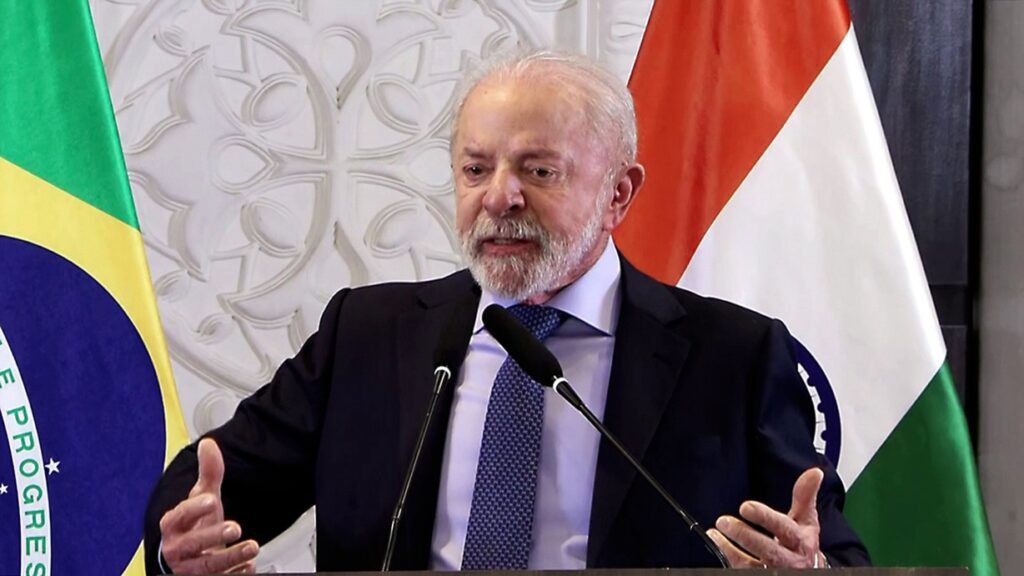
On 21 February 2026, Brazilian President Luiz Inacio Lula da Silva arrived in New Delhi for a five-day state visit, accompanied by 11 cabinet ministers and approximately 300 business representatives, constituting one of the largest delegations ever to accompany a Latin American head of government to India. The centrepiece was the signing of a Memorandum of Understanding (MoU) on critical minerals and rare earth elements at Hyderabad House, alongside nine further agreements covering digital cooperation, health, entrepreneurship, and aviation.
The minerals MoU establishes a framework for reciprocal investment across the full value chain: exploration, mining, processing, recycling, and refining. President Lula told Indian officials that only 30% of Brazil’s critical mineral reserves have been explored till date, and described India as Brazil’s preferred partner for both extraction and downstream processing. Both governments also set a revised bilateral trade target of $30 billion by 2030, up from the earlier figure of $20 billion. For the first time, bilateral trade crossed $15 billion in 2025, representing a 25% year-on-year increase. Brazil opened its first ApexBrasil trade and investment promotion office in New Delhi during the visit, and both countries jointly launched the Open Planetary Intelligence Network, an AI and satellite initiative for environmental monitoring.
Why does it Matter?
Brazil holds the world’s second-largest reserves of rare earth elements after China, as well as significant deposits of lithium, niobium, nickel, cobalt, and iron ore. The significance of this endowment has grown sharply since China began restricting critical minerals exports in 2024 and 2025 as a trade instrument, exposing the degree to which global supply chains for clean energy and advanced manufacturing had been built on the assumption that Chinese access would remain unconstrained. India’s National Critical Mineral Mission, approved in January 2025, is an acknowledgement that this assumption no longer holds.
The more instructive part of this story, however, concerns Brazil rather than India. For most of the past two decades, Brazil’s approach to its mineral endowment was essentially passive: the resources were there, investors would come, and commercial terms would determine the outcome. That posture was upended by its confrontation with the Trump administration in 2025, when the US imposed a 50% tariff on Brazilian goods in connection with the prosecution of former President Bolsonaro. This development taught Brasilia something that resource-rich middle powers have frequently learned the hard way: that large reserves attract coercion as readily as investment, and that the ability to direct who develops those resources, and on what terms, is itself a form of power that requires active management.
Brazil’s decision to designate India as a preferred partner for mineral extraction and downstream processing is therefore a strategic choice, not merely a commercial one. India is a buyer without coercive leverage. It has no history of using trade as a political instrument against Brazil, no military footprint in the Western hemisphere, and no competing territorial or ideological interest in the region. What India offers, including generic pharmaceuticals at scale, digital public infrastructure, and space and satellite cooperation is also genuinely complementary rather than duplicative of what China and the US provide. The breadth of the agreements signed during the Lula visit reflects this calculus: Embraer’s E175 assembly line in India, the CDSCO-ANVISA pharmaceutical MoU, and the Centre of Excellence for Digital Public Infrastructure are each long-term institutional bets that make the relationship more durable than any single commodity agreement.
The honest question is whether the minerals MoU will follow the logic of the relationship or the logic of India’s track record. Non-binding framework agreements on critical minerals have accumulated across Indian foreign policy with considerable frequency and modest conversion into actual investment. KABIL, India’s state-backed minerals acquisition vehicle that has been operational since 2019, has produced one overseas asset after several years of operations: a lithium brine exploration block in Argentina. Brazil is a more complex environment than Argentina: Chinese companies are deeply embedded in its mining sector, environmental licensing processes are lengthy, and the political economy of mineral development is contested domestically. The MoU establishes the intent. The institutional work required to act on it has not yet begun.
What to Look Out for?
The most immediate test of this agreement’s seriousness is whether KABIL submits a formal expression of interest in any Brazilian mineral block within the next twelve months. That would require a degree of inter-ministerial coherence across India’s Ministry of Mines, Ministry of External Affairs, and KABIL itself, that has not always characterised India’s overseas minerals strategy. Watch also for the India-MERCOSUR Preferential Trade Agreement expansion, which Modi described as a priority. If access to MERCOSUR (Southern Common Market) is genuinely on the table, it would extend the commercial logic of the India-Brazil relationship to Argentina, Paraguay, and Uruguay simultaneously, creating a regional anchor considerably more valuable than any bilateral deal alone. The ANVISA pharmaceutical MoU is, separately, perhaps the most commercially executable of the agreements signed: watch whether the Brazilian regulator moves on implementation within the year, or whether it joins the long queue of regulatory cooperation agreements that expire quietly without effect.
India-Latin America Trade crosses $39 billion, but the Structure of that Trade is the Problem
What Happened?
A Ministry of Commerce data analysis published in January 2026 shows India-Latin America bilateral trade reached $39.21 billion in FY 2024-2025, comprising exports of $15.17 billion and imports of $24.04 billion. In the first nine months of FY 2025-2026, trade had already reached $17.98 billion, suggesting another record will be set this year. Brazil alone accounted for approximately $15.2 billion of the total, a 25% year-on-year increase driven by iron ore, soya, and oil seed exports on the Brazilian side and pharmaceuticals and engineering goods on India’s.
The headline growth is real. Mexico has seen intensified engagement, with India launching a new bilateral economic cooperation framework in late 2025. Indian exports across the region concentrated in engineering goods, pharmaceuticals, chemicals, automobiles, and textiles, are growing in absolute terms. However, imports from Latin America are growing considerably faster and the reasons for that asymmetry are structural rather than cyclical.
Why does it Matter?
The $39 billion headline conceals two structural problems that the growth rate does not resolve, and that no amount of further trade promotion activity will address without specific policy intervention.
The first is the deficit and what it reveals about leverage. India runs a significant and widening trade deficit with Latin America because the region supplies raw materials that India’s economy structurally requires: ores, metals, energy, soya, and other agricultural commodities. This pattern of trade is not inherently problematic since comparative advantage exists for a reason, but it produces an asymmetry of negotiating power that India has not sufficiently reckoned with. India needs Latin America’s raw materials more than Latin America needs India’s finished goods. That means when it comes to the terms of investment access, royalty structures, local content requirements, or processing commitments – which are the dimensions of the relationship that actually determine its long-term strategic value – India’s leverage is limited. It is in a structurally weaker position than its overall bilateral trade volumes suggest.
The second problem is the export composition and what explains it. India’s 3.5% share of total exports going to Latin America is a significant underperformance relative to the region’s economic weight which encompasses a combined GDP of approximately $6 trillion and a population of 660 million people. Indian pharmaceuticals, chemicals, two-wheelers, and IT services have each found markets in Latin America but at a fraction of the penetration achieved in Africa, Southeast Asia, or the Middle East. The standard explanations citing distance, absence of direct shipping routes, and limited corporate presence, are accurate but incomplete. The more revealing observation is that these barriers have been well understood for at least a decade, have been acknowledged in every India-Latin America summit communique over that period, yet have not been meaningfully reduced. This suggests the problem is not one of analysis but of institutional priority: India has not treated Latin American market access as a sufficiently important objective to resource the interventions required to achieve it.
The shipping gap is the most concrete illustration of this. There are no direct sea routes between India’s major west coast ports and Latin American port infrastructure. All containerised cargo transits via hubs in Europe or the US, adding two to three weeks to transit times and thereby increasing logistics costs. The Port of Chancay in Peru, developed by China’s COSCO and now operational as a major transhipment hub, has transformed the logistics geography of South America’s Pacific coast for Asian cargo. India’s most commercially rational near-term option for improving connectivity may well involve routing exports through Chinese-built infrastructure. That is not an argument against doing so since pragmatism has its own strategic logic. It does, however, illustrate the degree to which India has ceded the logistics architecture of a region it claims as a priority to a competitor that moved early and more decisively.
What to Look Out for?
The CDSCO-ANVISA pharmaceutical regulatory MoU signed during Lula’s visit has the potential to be the most commercially consequential agreement of the year if ANVISA moves on implementation. Brazil’s public health procurement system is one of the world’s largest buyers of generic pharmaceuticals and India already supplies a substantial share of it. A streamlined approval pathway could expand that share considerably. Watch this above all other agreements from the Brazilian visit as the most immediately executable. More broadly, watch whether India’s Ministry of Ports, Shipping and Waterways places any direct investment or policy resources behind improving connectivity with Latin American ports. Its sustained absence from this agenda, even as the trade volumes and strategic arguments for action have accumulated, is the clearest available signal of where the relationship actually sits in India’s hierarchy of priorities.
Guyana and the Iran War: What a Small Country's Oil Boom Reveals about India's Energy Strategy
What Happened?
Five years ago, Guyana’s oil production was negligible. Today the country produces over 800,000 barrels per day from ExxonMobil’s offshore Stabroek Block, and is on a verified trajectory to reach 1.7 million barrels per day by 2030. That growth rate, which ranks among the fastest in the history of the global oil industry, has transformed one of South America’s smallest economies into a producer of genuine global significance, with per capita revenues that rival Gulf states at current prices.
India’s commercial engagement with Guyana is recent but accelerating. In October 2025, Indian Oil Corporation and Hindustan Petroleum purchased a combined 4 million barrels of Guyanese crude from ExxonMobil, marking the first Indian imports of Guyanese grades. By the end of 2025, cumulative Indian imports from Guyana had reached approximately 6 million barrels, according to Guyana’s High Commissioner to India. Guyana simultaneously issued a formal invitation to Indian companies to participate in its 2026 offshore block licensing round, with ONGC Videsh, BPCL, and Reliance Industries all identified as prospective bidders.
The geopolitical context then shifted dramatically. According to Goldman Sachs estimates cited by Al Jazeera, the closure of the Strait of Hormuz following the outbreak of the US-Iran war, has disrupted supplies of approximately 14.5 million barrels of oil per day globally. India, which sources over 60% of its crude from the Middle East, faced LPG shortages, export duties on refined products, and sustained pressure on its current account. Guyanese crude, which is light, low-sulphur, produced by an American operator, and free of sanctions exposure, became materially more attractive in this context.
Why does it Matter?
The Guyana story has two layers to it: a superficial reading and a more important underlying one. The former is that a new non-OPEC producer has entered India’s import mix, adding useful supply diversification at a time when Middle Eastern routes are disrupted. This is accurate and worth noting. The more important reading concerns what Guyana’s emergence reveals about the structure of India’s energy vulnerability and the strategic choices that vulnerability has left unaddressed.
Guyana’s crude grades, namely Liza, Golden Arrowhead, and Unity Gold, are light and low-sulphur, which means they serve a fundamentally different set of Indian refineries than the heavy sour crude imported from Russia and Venezuela. This complementarity is commercially significant: Guyana does not substitute for India’s existing supply relationships; it extends them, providing optionality across a wider range of crude grades and geopolitical exposures simultaneously. At a moment when the Strait of Hormuz’s closure has reduced global supplies by an estimated 14.5 million barrels per day and Brent has not traded below $100 per barrel for nearly two weeks, the value of a supply source that is geographically distant from the Persian Gulf, produced by an American operator, and free of exposure to sanctions, is not difficult to calculate.
The geopolitical dimension is equally significant. India has spent the past four years absorbing the diplomatic cost of its dependence on Russian crude, defending that position at successive G20 summits, managing secondary sanctions risk, and navigating the tension between its own non-alignment principles and the practical reality of buying discounted oil from a country that is regarded as a pariah by most of its strategic partners. Guyanese crude offers something qualitatively different: it is produced by ExxonMobil, sold through transparent commercial mechanisms, and carries the implicit endorsement of Washington. At a moment when India is simultaneously negotiating tariff relief from the US and attempting to reduce its dependency on Russian oil without paying a prohibitive premium, Guyanese crude serves multiple strategic objectives at once without requiring India to compromise any of them.
The opportunity India has not yet taken is upstream equity, and this is where the story becomes more revealing of India’s strategic habits. ONGC Videsh has demonstrated over two decades ago that Indian state-wned companies can be credible participants in offshore oil production abroad, holding stakes in fields in Sudan, Vietnam, Russia, Brazil, and Mozambique. The licensing round in Guyana in 2026 is the first realistic opportunity for India to acquire upstream equity in one of the world’s fastest-growing and most commercially attractive oil provinces. The difference between being a buyer and a producer is not simply a matter of commercial returns; a producer has equity in the resource, participates in output decisions, and builds the kind of long-term bilateral stake that transforms a transactional relationship into a strategic one. India has been invited to participate. The question of why it has not yet moved when the strategic logic is clear, a precedent exists, and the invitation is on the table, says something about the gap between India’s stated energy security ambitions and its institutional capacity to act on them.
What to Look Out for?
The Guyana offshore block licensing round of 2026 is the most immediate signal to watch. A bid from ONGC Videsh, BPCL, or any Indian private player would mark India’s first upstream equity stake in Latin American oil production and would fundamentally change the character of the India-Guyana relationship. One must keep an eye also on Guyana’s gas-to-shore project for which India has offered technical assistance. This project will unlock the associated gas currently being flared or reinjected at Stabroek for domestic energy use, and India’s experience with its own offshore gas sector, particularly the KG Basin, is genuinely relevant. Beyond energy, Indian construction and infrastructure companies are already active in Guyana with contracts for stadiums, road infrastructure and solar installations. The bilateral relationship has more institutional depth than its energy trade volumes suggest and this foundation will be an asset if India moves decisively on the upstream opportunity.
Ecuador’s first visit to New Delhi: What it tells us about India's Latin America Strategy
What Happened?
On 29 April 2026, Ecuador’s Minister of Foreign Affairs Gabriela Sommerfeld Rosero arrived in New Delhi for a three-day official visit, described by both governments as the first visit to India by a serving Ecuadorian foreign minister. The programme was notably intensive for a bilateral relationship of this scale. Minister Sommerfeld Rosero met External Affairs Minister S. Jaishankar on the first day, before proceeding to have separate meetings with Health Minister JP Nadda, Commerce and Industry Minister Piyush Goyal, and Minister of State for External Affairs Pabitra Margherita. She also laid a wreath at Rajghat, a protocol element reserved for visits of political significance.
This visit was built on one to Quito by MoS Margherita in November 2025, during which India opened a resident Embassy in Ecuador for the first time in the two countries’ diplomatic history. An MoU on diplomatic training cooperation was also signed. During the April 2026 visit, Jaishankar confirmed that funding had been agreed on for Quick Impact Projects (QIP) in Ecuador, and welcomed Ecuador’s decision to begin the accession process for the International Solar Alliance and the International Big Cat Alliance, two India-led multilateral frameworks that serve as soft institutional anchors for bilateral engagement.
Why does it Matter?
Ecuador does not feature in most analyses of India’s Latin America strategy, and for understandable reasons. It is a small, dollarised economy of approximately 18 million people whose political institutions have proved fragile even by the standards of a turbulent region: four presidents in the past eight years, a constitutional crisis in 2023 that ended with a presidential assassination and a snap election, and a security environment shaped by the rapid expansion of organised crime connected to the cocaine trade. The question of why New Delhi is investing significant diplomatic attention in this relationship at this moment therefore deserves a more precise and nuanced answer than is usually offered.
The structural answer concerns Ecuador’s position in the Pacific Alliance architecture. It is an associate member of MERCOSUR and participates in discussions around the Pacific Alliance, the trade bloc encompassing Chile, Peru, Colombia, and Mexico that represents the Pacific-facing, market-oriented side of South American economic integration. For India, which has no concluded FTA with any Latin American country, Ecuador’s interest in a bilateral trade agreement creates an opportunity to establish a precedent and a beachhead simultaneously. A concluded FTA with Ecuador would not in itself be of major commercial consequence since bilateral trade between the two countries is modest, but it would demonstrate that India can close a trade deal in Latin America, which matters for the credibility of its ongoing negotiations with Peru and Chile. Jaishankar’s language from the visit suggests both sides are aware of this sequencing logic.
The competitive answer concerns shrimp, and it is more uncomfortable for India than it is usually presented. Ecuador and India are the world’s two largest exporters of farmed shrimp and until 2025 they divided the American market between them on roughly competitive terms. USA’s tariff of approximately 50% on Indian shrimp has transferred that market share to Ecuador. India’s aquaculture exporters, concentrated in Andhra Pradesh and Odisha, have lost access to one of their primary markets at a scale that is commercially significant for coastal fishing communities. Ministerial meetings with both the Health and Commerce Ministers on the same day suggest that India is exploring if Ecuador will accept a cooperative arrangement on third-market positioning in Southeast Asia, the Middle East or the European Union, rather than continuing to compete for a US market that may remain partially closed to Indian products for the foreseeable future. That is a pragmatic instinct, but it is also an implicit acknowledgement of a structural competitive loss that Indian trade policy has not yet fully absorbed.
The methodological answer is perhaps the most significant for understanding India’s broader Latin America posture. The visit follows a pattern that has been visible since 2024: opening embassies in countries where India had only non-resident diplomatic representation, funding QIPs in markets that have not previously received them, and conducting foreign office consultations at a ministerial level with counterparts who have not historically been on the circuit. This sustained diplomatic engagement and institutional presence are preparatory investments for substantive future economic engagement. India has done it in Ecuador. Whether it will do it across the rest of the region, including Bolivia, Paraguay, Uruguay, Honduras, and El Salvador at comparable pace and with comparable follow-through is the question that will determine whether 2026 will represent a genuine inflection in India’s Latin America strategy or yet another cycle of renewed intent.
What to Look Out for?
Watch whether the meetings with Commerce Minister Goyal produce a formal mandate for FTA scoping talks. President Noboa’s administration is the most commercially hospitable Ecuador has had in over a decade and that window is limited: his term runs until May 2029 and Ecuador’s political environment does not encourage assumptions about continuity. The QIP funding deserves close attention as an indicator of strategic intent; the sectors selected, namely agriculture, artificial intelligence, cyber security, and health, correspond to areas where India has exportable public-sector expertise and the pattern of QIP funding in other regions suggests it functions as a precursor to larger cooperation frameworks. If India uses this funding to establish Indian technical presence in Ecuadorian government institutions rather than simply transferring equipment, it will be a more meaningful signal than the announcement of the projects themselves.
Peru Elects its Ninth President in Ten Years, as One Candidate Compared Himself to a Cartoon Character
What Happened?
On 12 April 2026, Peruvians went to the polls in a presidential election featuring 35 candidates including a stand-up comedian, a media baron, a political dynasty heiress, and Rafael Lopez Aliaga, the ultra-conservative former Mayor of Lima who has publicly compared himself to the cartoon character Peppa Pig’s father, apparently as a matter of personal pride.
The elections did not go smoothly. Ballot boxes failed to arrive at dozens of polling stations across the country and tens of thousands of registered voters were unable to cast their ballots. Voting was extended to a second day. When results began to emerge on the evening of 13 April, no clear winner had emerged from a field spread too widely for any candidate to secure a first-round majority.
Early tallies showed Keiko Fujimori, daughter of former president Alberto Fujimori who has served prison time for human rights abuses and corruption, leading with approximately 17% of the votes. A runoff is now scheduled for 7 June 2026. By the time a winner is annouunced, Peru will have had nine presidents in ten years, a political turnover rate that reflects the systematic collapse of institutional trust across the country’s entire governing class. A vendor in Lima captured the national mood succinctly when he told Reuters, “Peru is a mess, and there is no candidate worth voting for.”
Why does it Matter?
The reason this election belongs in a newsletter about India is that India is currently in the final stages of negotiating an FTA with Peru, and has indicated it expects to conclude that agreement by the middle of 2026. The government with which India has negotiated nine rounds may not be the government that signs the deal, ratifies it, or implements it. Whoever wins in June will inherit a country in which the dominant electoral conversation was about which candidate would build the most prisons, not about trade policy. That is not the most auspicious backdrop for a landmark bilateral trade agreement, but it is a situation India finds itself in and navigating.
Check These Out
Recommended further readings on the topics covered this month:
- Latin America: A New Geography for India’s Emerging Critical Minerals Partnerships Centre for Social and Economic Progress (CSEP). The most rigorous available policy analysis of how India can build institutionally anchored mineral partnerships across Latin America, with country-specific recommendations for Argentina, Brazil, Chile, and Peru. Read here
- Venezuela After Maduro: Oil, Power and the Limits of Intervention Al Jazeera. A comprehensive account of the structural and political obstacles to Venezuela’s oil sector revival, with useful comparative analysis of what the intervention means for energy markets beyond the immediate supply disruption. Read here
- Venezuela’s Oil Sector Recovery: Navigating the Post-Maduro Investment Landscape FTI Consulting. A rigorous legal and financial analysis of the specific barriers, including legacy investment claims, debt restructuring, and jurisdictional uncertainty that any serious Venezuelan oil revival would need to resolve before major capital commitments are credible. Read here
- India-Brazil Bond Deepens With Critical Minerals Pact The Diplomat. A thorough account of what President Lula’s visit to New Delhi produced across all ten agreements signed, including AI, aviation, and defence cooperation that received less coverage than the minerals-related headlines. Read here
- Increasing Venezuela’s Oil Output Will Take Several Years and Billions of Dollars Council on Foreign Relations. Brad Setser’s expert brief is the clearest available account of the gap between Washington’s ambitions for Venezuelan oil production and what the investment, infrastructure, and political conditions actually allow. Read here
Conclusion
The seven stories in this edition, read together, suggest that India’s engagement with Latin America is entering a more consequential phase, one characterised less by declarations of strategic partnership and more by the more difficult work of navigating specific commercial, political, and institutional constraints. Venezuela’s oil is back in the market, but restoring the industry to meaningful scale is a fifteen-year project requiring capital commitments that major Western companies have not yet made. Brazil’s minerals MoU is the most ambitious framework agreement signed between the two countries, but its value will be determined entirely by what follows the signing ceremony. Peru and Chile offer India the access to minerals it needs, but the negotiating environment on both sides is more constrained than the official optimism suggests. Guyana represents a genuine energy security opportunity, and India has yet to act on its upstream dimension. Ecuador’s visit is a signal of diplomatic intent, and intent in India’s Latin America engagement has consistently preceded delivery by a considerable margin.
What is different in 2026 is the external pressure driving these engagements. A war that closed the Strait of Hormuz, tariffs that restructured Indian export flows, and a Chinese tightening of critical mineral supply chains have each, in their own way, reduced the cost of inaction in Latin America to a level India can no longer comfortably accept. Whether that pressure translates into a durable strategic architecture, or merely a series of reactive transactions, is the question this relationship will spend the next several years answering.
Thank you for taking the time to read this edition of Southern Meridian. We look forward to continuing this analysis in the months ahead.