As geopolitical tensions mount, ongoing conflicts globally have cradled battlefield innovation. Ananta’s Command Chain reviews the security and defence-centric developments that are shaping warfare’s evolution. In this edition we analyse the unfolding military action by the United Staes (US) and Israel against Iran, India’s new carrier killer missile, Bangladesh’s new Chinese-backed UAV facility, the role of FPV footage in the Russia-Ukraine war, and how Border Roads Organisation (BRO) quietly enables India’s military power.
The sum of all fears: US and Israeli military action against Iran
This article was last updated on March 3 2026, as combat operations by US, Israel and Iran were ongoing.
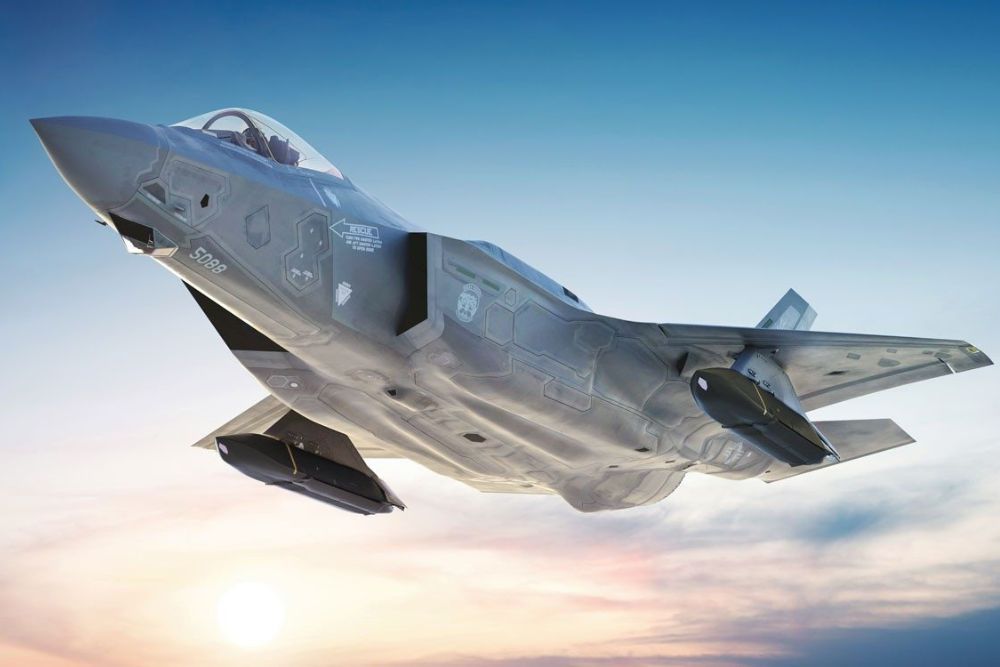
On 28 February, US President Donald Trump announced a military operation against Iran aimed at “eliminating imminent threats from the Iranian regime”. Since then, the campaign has evolved into a long series of air strikes and precision weapons exchanges with US forces and Israeli forces on one side and Iranian forces on the other. The US has launched these strikes under the name Operation Epic Fury and Israel under Operation Roaring Lion. The campaign has also led to the assassination of Iran’s Supreme Leader, Ayatollah Ali Khamenei. Iran has responded with decades worth of massed strength in terms of short, medium and long-range precision strike missiles in heavy numbers which are giving US and Israeli air defence umbrellas in the region a hard time. The attrition of projectiles between the two sides has become the center of gravity for the conflict, as leaders can be substituted by Iran as has been the case with an interim body overtaking administration after the supreme leader’s death and confirming a successor within days, a similar succession mechanism has also been exercised by various armed forces of the Iranian regime as seen with the Iranian Revolutionary Guard appointing a replacement within a day for its chief killed in combat operations. With US President Trump confirming that the combat operations against Iran may last weeks and the possibility of putting troops on the ground is also a prospect things can escalate quickly and catastrophically for all parties involved.
India’s carrier killers: How the LRAShM reshapes maritime deterrence
India’s Long Range Hypersonic Anti Ship Missile (LRAShM) represents a qualitative evolution in how New Delhi approaches maritime deterrence, shifting emphasis from fleet-centric power projection to precision denial of adversary manoeuvre space. While it can’t be denied that India’s greatest strategic challenge and neighbour China has fielded a similar weapon, India takes more from the paradigm of sea-denial formulated by British naval theorists as far back as the Royal Navy’s very origins, and translates it into 21st century kinetic technology
Technically, hypersonic glide vehicles introduce challenges that extend beyond raw velocity. Their ability to manoeuvre unpredictably during midcourse and terminal phases undermines existing naval air defence doctrines built around layered interception and predictive tracking. Even advanced systems face sharply reduced engagement windows, forcing defenders to allocate disproportionate resources to protection rather than mission execution.
In strategic terms, the LRAShM is less about numerically matching China’s DF-21 family of aircraft carrier killer ballistic missiles and more about complicating operational planning. When integrated with India’s expanding maritime ISR network including satellites, P-8 aircraft, and seabed sensors, the missile strengthens a kill chain that prioritises quality of targeting over volume of fire. This integration is what transforms a missile into a strategic system rather than a symbolic capability.
Beyond these strategic considerations, the operational geometry of naval warfare itself begins to change when hypersonic capabilities enter the equation. Large surface combatants and tightly clustered formations derive their traditional strength from layered defence, mutual sensor coverage and the concentration of firepower. Hypersonic threats undermine these advantages by compressing reaction timelines to a degree that strains even the most sophisticated defensive architectures. When warning, tracking, and interception windows shrink to mere seconds, the protective value of proximity between ships diminishes. Instead of reinforcing collective defence, dense formations may present lucrative, high-value targets whose loss would carry disproportionate operational and psychological consequences.
This dynamic encourages dispersion rather than concentration. Ships operating at greater distances from one another complicate an adversary’s targeting calculus and reduce the risk that a single salvo could disable multiple platforms. However, dispersion also erodes the cohesion and mutual support that define traditional battle group tactics. Commanders must balance survivability against the need for coordinated action, secure communications and shared situational awareness across wider operating areas. The result is a gradual shift away from visually impressive but vulnerable formations toward looser, network-centric constellations of assets linked by data rather than proximity.
Logistics and sustainment considerations further reinforce this trend. Large surface ships require predictable replenishment patterns and support vessels that themselves become targets in a hypersonic threat environment. Protecting these auxiliary elements becomes more difficult when the adversary can strike rapidly and from extended ranges. This vulnerability incentivises a transition toward smaller, more numerous platforms, distributed lethality concepts and increased reliance on unmanned systems that can absorb risk without catastrophic loss.
Taken together, these effects suggest that hypersonic weapons do more than extend strike range; they challenge the very logic of concentrated naval power at sea. Tight battle group formations, once the embodiment of maritime strength, risk becoming liabilities in an environment where speed, surprise and precision favour dispersion, deception, and distributed resilience over massed visibility.
China, Bangladesh and unmanned leverage: A quiet shift in South Asian security dynamics
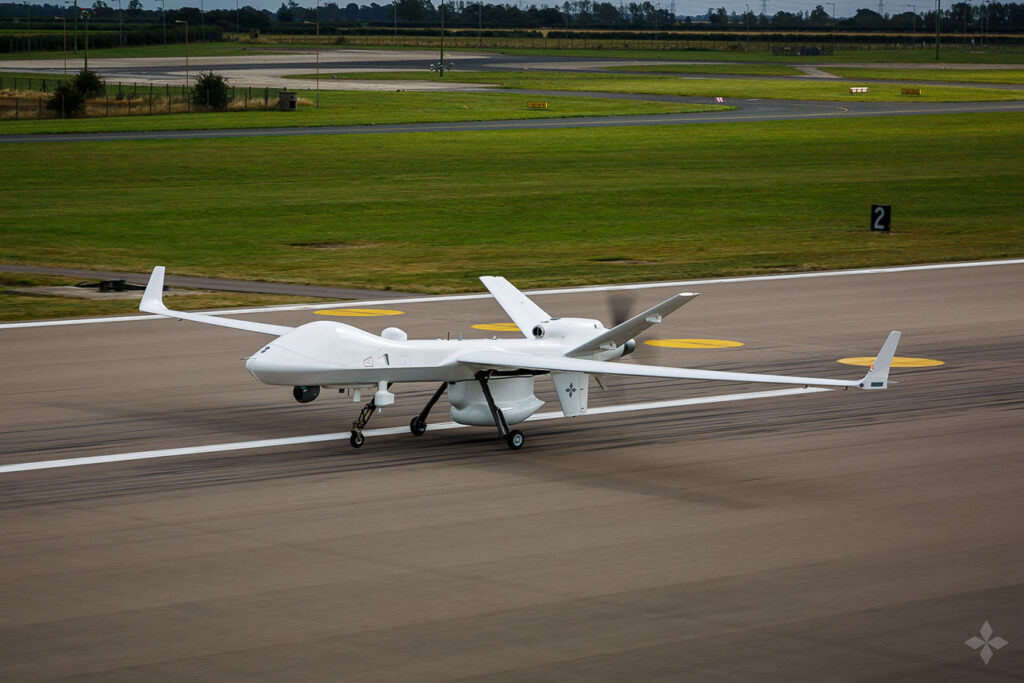
China is helping to establish an Unmanned Aerial Vehicle (UAV) production facility in Bangladesh. However, instead of a simple strategic or military industrial complex-linked move, the development must be understood against the backdrop of Bangladesh’s historically constrained defence spending and its recurrent cycles of political volatility. For decades, Dhaka has operated with one of the smallest military budgets in South Asia relative to population size and strategic exposure. Successive governments have had to balance developmental priorities, economic fragility, and internal political contestation, often leaving modernisation of the armed forces as a secondary objective. In this context, the arrival of cost-effective, locally supported unmanned aerial systems is likely not only a procurement decision but a structural shift in how Bangladesh can think about capability building under tight fiscal and political limits.
UAVs, particularly when assembled or supported locally, offer a comparatively affordable pathway to expand operational reach. They reduce dependence on expensive aviation infrastructure, require smaller training pipelines, and allow incremental fleet growth without headline defence outlays, and thus this lower-visibility expansion is strategically convenient.
Political instability has also played a role in shaping Bangladesh’s security preferences. Frequent political tensions, allegations of electoral irregularities, and periodic unrest create a premium on internal surveillance and border management. UAVs are well suited for these tasks. They provide persistent monitoring over remote border regions, coastal zones, and sensitive internal areas without deploying large numbers of personnel. This helps the government maintain situational awareness during periods of unrest or cross-border tension without escalating to overt military mobilisation. In effect, unmanned systems offer a quiet strengthening of state capacity in a way that aligns with Bangladesh’s internal political realities.
At the same time, local production introduces a new dimension to Bangladesh’s defence ecosystem. By hosting manufacturing and maintenance capabilities, Dhaka reduces reliance on foreign turnaround times and supply chains. This improves readiness and extends the operational life of platforms at lower cost. However, this benefit comes intertwined with technological dependence. Chinese UAV systems are typically integrated with proprietary control software, data links, and logistical frameworks. As Bangladesh builds familiarity and doctrine around these systems, it gradually aligns its operational habits and training models with Chinese technical standards. Over time, this can influence how the armed forces think about surveillance, command structures, and information management.
For China, this arrangement reflects a subtle mode of influence that does not rely on military bases or overt deployments. Industrial cooperation creates long-term relationships with technicians, officers, and planners. Training exchanges and technical support networks foster familiarity that extends beyond equipment use. These connections can translate into diplomatic leverage during periods of regional tension, not through coercion but through embedded reliance. The presence of a defence-industrial footprint allows China to shape the trajectory of Bangladesh’s modernisation without attracting the scrutiny that accompanies traditional military partnerships.
Demoralising the enemy: FPV strike footage as a decisive grey-zone instrument
The circulation of First Person View (FPV) strike footage in the Russia–Ukraine war has evolved into far more than documentation of battlefield events. It has become a central instrument in an information contest that runs parallel to the kinetic one. These clips function simultaneously as evidence, instruction, intimidation, propaganda, and memory. In a conflict where both sides compete not only for territory but also for narrative dominance, FPV videos operate as a uniquely potent form of information warfare.
At the tactical level, FPV drones shorten the gap between seeing and acting. Operators identify a target, maneuver through obstacles in real time, and deliver a strike within moments. The recording of this process is not incidental but integral. Footage is reviewed to refine piloting techniques, optimise approach angles, and adjust munitions choices. What once required formal training cycles can now be disseminated through shared videos across units and even across brigades. Tactical knowledge spreads horizontally, accelerating adaptation. In this sense, the video itself becomes a training manual, a data set, and a proof of concept all at once.
Yet the power of these recordings extends beyond professional learning. They also reshape the psychology of those at the receiving end. FPV attacks are intimate in a way that traditional artillery or airpower is not. The perspective is close, deliberate, and relentless. For soldiers who know such drones may be circling overhead at any moment, the sense of exposure is constant. The videos reinforce this fear by showing how little warning victims receive and how precise the strikes can be. Repeated exposure to such imagery can cultivate a perception that nowhere is safe and that concealment is futile, eroding morale over time.
For domestic audiences, FPV footage serves a different but equally strategic purpose. War fatigue, skepticism, and distance from the front can dull public engagement. Official briefings and statistics rarely capture attention for long. In contrast, short, visceral videos communicate effectiveness instantly. They demonstrate that resources are being used efficiently and that technological ingenuity is producing tangible results. This visual proof can sustain support by transforming abstract reporting into concrete, emotionally charged evidence.
Internationally, the same material operates as a form of narrative leverage. Allies and observers can see, rather than simply hear about, the evolving nature of the conflict. The footage underscores the innovative use of inexpensive technology to counter more traditional military assets, reinforcing perceptions of adaptability and resilience. In an era when social media amplifies visual content far more readily than written analysis, these clips circulate rapidly, shaping impressions of the war far beyond the battlefield.
FPV strike videos also contribute to a broader cultural shift in how modern warfare is experienced and remembered. The perspective resembles that of video games and action cameras, creating a strange familiarity that blurs the boundary between entertainment aesthetics and lethal reality. This familiarity increases sharing ability and engagement but also normalises a particular way of viewing violence: as something immediate, immersive, and visually compelling.
Long after the conflict ends, these recordings will remain as part of historical record. They will influence how this war is studied, represented, and understood. The narratives of ingenuity, precision, vulnerability, and technological improvisation formed around them will shape expectations of future conflicts. In this way, FPV footage is not only a tool of present information warfare but a contributor to the future imagination of war itself.
Talking logistics: How BRO quietly enables India’s military power
India’s military posture has always been inseparable from the terrain it must defend. Mountain chains, glaciated valleys, deserts, and dense forests create natural barriers that complicate movement as much as they offer protection. Over decades, the Border Roads Organisation (BRO) has methodically reduced these barriers not through mammoth projects but through steady, persistent construction in some of the world’s harshest terrains. In doing so, it has reshaped the practical foundations of India’s military capability.
The BRO’s achievements are most visible in the network of roads that now thread through regions once considered logistically inaccessible. High-altitude stretches in Ladakh, Arunachal Pradesh, Sikkim, and Uttarakhand that previously demanded days of precarious travel can now be traversed in hours. These roads are not merely transport links but operational enablers. Armoured vehicles, artillery systems, fuel convoys, and engineering equipment can be moved forward with reliability, allowing formations to deploy with weight and speed rather than in dispersed, lightly equipped elements.
Tunnels have become a defining symbol of this transformation. By cutting through mountains that were once seasonal bottlenecks, the BRO has ensured year-round connectivity to forward areas.
Projects such as the Atal Tunnel and the Sela Tunnel eliminate long detours and bypass passes frequently closed by snow and landslides. This continuity allows troops and supplies to move regardless of weather, turning episodic access into sustained presence. For the military, this means planning is no longer hostage to seasonal windows; readiness becomes constant rather than conditional.
The BRO has constructed hundreds of modular and permanent bridges across fast-flowing rivers and deep gorges too, enabling the movement of heavy equipment to forward posts. These structures are designed to bear the weight of modern military hardware, from tanks to missile systems. Each bridge reduces dependence on limited crossing points and creates redundancy, ensuring that logistics networks are resilient against both natural disruption and potential hostile action.
Beyond the immediate military benefits, this infrastructure has quietly improved surveillance and situational awareness. Better roads allow regular patrols and the rapid rotation of personnel. They support the installation and maintenance of sensors, communication systems, and observation posts. Stockpiles of fuel, ammunition, and rations can be maintained closer to the front, compressing mobilisation timelines during crises. What appears as simple connectivity translates into strategic depth and operational flexibility.
The BRO’s work also carries a dual-use character that strengthens the broader national posture. Improved connectivity benefits local communities, integrates remote regions economically, and builds goodwill among populations living near sensitive borders. Civilian traffic on these routes normalises presence and sustains maintenance, ensuring that infrastructure remains active and serviceable even in peacetime. This blending of civilian and military utility enhances resilience without drawing attention to the underlying strategic intent.
Check these out:
Dolzikova, D., & Kaushal, S. (2026, February 5). New START expiry: Implications for Europe. Royal United Services Institute.
Press Information Bureau. (2025, November 20). Defence Atmanirbharta: Record production and exports. Government of India.
PRS Legislative Research. (n.d.). Provision of all-weather road connectivity under Border Roads Organisation. PRS Legislative Research.
Royal United Services Institute. (n.d.). Space during the Cold War: The Strategic Defense Initiative (RUSI War in Space Podcasts, Episode 27).
Snyder, R. (2025, July 22). Kyiv as the new Berlin: Ukraine’s role in modern espionage conflict. Small Wars Journal.
Stroikos, D. (2025, June 5). India’s space policy: Between strategic autonomy and alignment with the United States. Council on Foreign Relations.
Tang, M. K. (2025, July 31). Narratives under fire: Information warfare lessons from India–Pakistan and Ukraine–Russia. Small Wars Journal.