

As geopolitical tensions mount, ongoing conflicts globally have cradled battlefield innovation. Ananta’s Command Chain reviews the security and defence-centric developments that are shaping warfare’s evolution. In this edition, we analyse how iterative development on India’s indigenous fighter aircraft is a necessity, how India’s nuclear signaling and testing should evolve in a post-Operation Sindoor era, how a new greenfield shipyard is about to expand India’s shipbuilding horizons and how countermeasures are half the battle against drones. In this edition we also analyse how a minesweeping drone can fill a naval capability gap for India, how India’s tactical arsenal is being boosted by US supplied precision weapons, the evolution of EW and what lies ahead for India, and how a Tejas crash at the Dubai airshow will not affect its export prospects.
Counting the Birds of Prey
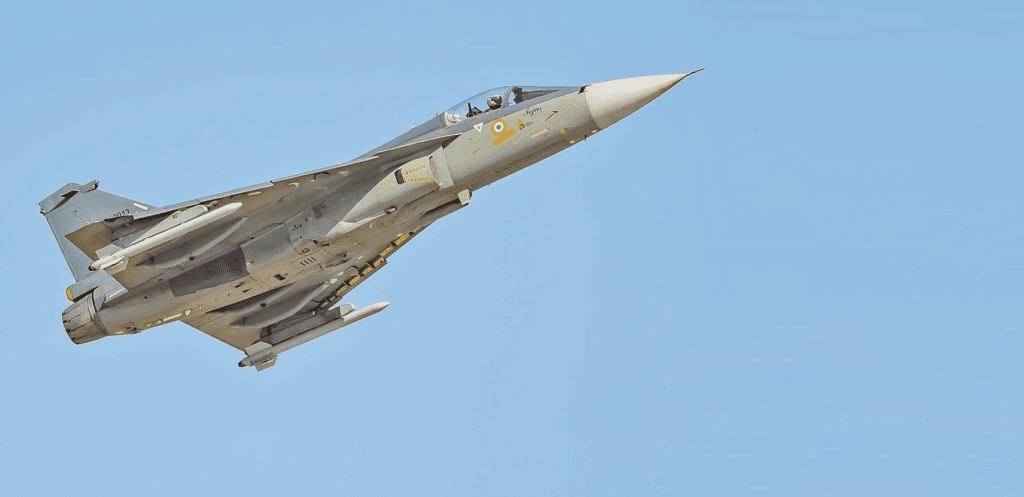
The Indian Air Force (IAF), sanctioned for 42 squadrons, currently operates barely 30, compelled by the rapid retirement of ageing MiG‑21s and protracted acquisition timelines. Stopgap imports seem tempting, offering ready airframes with modern avionics. Yet short-term injections do little to sustain airpower’s ecosystem.
Once the imported jets arrive, maintenance contracts, foreign supply chains, and training dependencies trail close behind. Since the 1980s, the procurement model where each tranche diversifies types, fragments logistics, and dilutes technical sovereignty has led to a less-than-optimal level of advancement in India’s airpower ecosystem. The paradox is familiar; filling numerical gaps today often widens technological ones tomorrow.
The LCA Tejas has become emblematic of this crossroads. Born of necessity during the 1980s, it survived political indifference, design recalibrations, and industrial learning curves to now shoulder India’s lightweight fighter segment. Its critics emphasise delays and foreign subsystems; its advocates highlight survivability, agility, and steadily improving reliability. Between these two poles lies the crux of India’s modern aerospace challenge – moving from fourth-generation, entry-level performance to world‑class iteration before the next procurement cycle closes another decade of dependence.
For the IAF’s tactical planners, aircraft are counted in capability and numbers alike; however, much of these standards being accounted for are based on observations that were tactically sound before the era of stealth and unmanned platforms.
Iterative development offers a different philosophy and India’s adversaries have already embraced it in their own military industrial complex. By continuously refining an existing platform, improving sensors, engine performance, radar processing, stealth shaping, or cockpit ergonomics, India could sustain a rolling design culture. The LCA Mk1, Mk1A, Mk2, and likely twin‑engine derivatives represent steps in a generational continuum.
Each block closure adds modular learning for the next. The benefits compound, production lines remain active, workforce expertise matures, and foreign dependency recedes cycle by cycle.
Import-dependent fleet diversification, by contrast, offers immediacy at the cost of integration complexity. To illustrate, India operates SU-30MKI, Mirage 2000, MiG‑29UPG, Rafale, Jaguar, and Tejas, among other types of fighter aircraft, each requiring separate simulators, ground equipment, and supply contracts. Such pluralism weakens cost‑effectiveness and raises logistical risks in a crisis. India’s uneven mix of import platforms reveals a procurement policy shaped more by short-term reactions than by strategic continuity.
Economics reinforces the case for iteration. A modern fighter’s lifecycle cost can exceed triple its procurement cost once maintenance, spares, and mid‑life upgrades are included. Every new foreign design introduces fresh learning expenses and currency outflows. Indigenous evolutionary models amortise those costs across generations. A radar processor designed for the Tejas Mk1A could form the software backbone for the Mk2’s active electronically scanned array (AESA). A digital flight control algorithm refined on a limited series can, after maturity, scale into heavier classes like the Advanced Medium Combat Aircraft (AMCA). The compounding development model—similar to automotive platform sharing—saves years and billions in recurring R&D.
Nuclear signaling in a post-Operation Sindoor world
India’s strategic deterrence posture has reached its most delicate phase since the 1998 Pokhran tests. The recent high-altitude test series that reportedly validated ballistic missile variants with enhanced re‑entry accuracy, signals a transition from declaratory deterrence to demonstrative credibility. Yet this evolution unfolds in a world less defined by binary rivalries and more by overlapping alignments. Nuclear signaling that once functioned within a dyadic framework must now adapt to a multilateral stage where perception, timing, and messaging matter as much as trajectory and payload.
India’s national security subtext extends beyond propulsion or guidance validation, especially since the first phase of Operation Sindoor in May 2025. By conducting tests under controlled transparency—neither fully secretive trials nor orchestrated for media spectacle—India likely aims to reaffirm technical continuity while acknowledging global scrutiny.
The Agni-V platform, now entering production maturity, has achieved positional accuracy comparable to peer-class systems. But the newer extension, rumoured to push effective range toward 7,000 kilometres with multiple re‑entry vehicle (MRV) capability, positions India’s deterrence horizon from regional assurance to global deterrent articulation. The central question, however, is not how far the missile flies but what message its flight conveys.
Traditional nuclear signaling in South Asia rested on calibrated opacity. Each test, deployment, or doctrinal statement was choreographed to influence adversary perception without overt provocation. India’s “credible minimum deterrence” doctrine relied on restraint as persuasion; capability existed, though seldom displayed. Operation Sindoor challenges that logic subtly—it introduces the idea that restraint, if misread as inertia, risks strategic irrelevance. In a landscape where Beijing announces near‑monthly technological milestones and Islamabad publicises compact tactical systems, silence can suggest lag. India’s renewed testing rhythm is therefore not aggressive but corrective, restoring narrative parity.
Reinventing nuclear signaling today requires recognising how audiences have multiplied. During the Cold War, deterrence had two listeners, the rival and one’s own citizenry. In 2025, each event reverberates across multilateral groupings – BRICS deliberations, Quad partnerships, Indian Ocean dialogues, and missile technology control regimes. Every test, therefore, must serve diplomatic dual‑coding, reassuring partners of responsible stewardship while cautioning adversaries of credible resolve. The art lies in synchronising technical demonstration with regional reassurance rather than allowing one to overshadow the other.
India’s nuclear doctrine—unchanged in its declared fundamentals of no‑first‑use, massive retaliation, and political control—now faces interpretation challenges. Hypersonic glide vehicles, high‑precision multiple independently targetable reentry vehicles (MIRVs), and dual‑use command systems blur the once-clear thresholds of “strategic” versus “tactical.” The Agni platform family, initially conceived for dedicated deterrence, increasingly supports flexible payload configurations suited for both conventional and nuclear tasks. Such adaptability demands refined signaling to avoid any confusion during crises. When capabilities expand faster than the pace at which declaratory policy evolves, the ambiguity once considered stabilising may instead breed misperception.
Operation Sindoor also coincides with India’s emergence within multiple strategic communities. Membership in technology‑sharing frameworks such as the Wassenaar Arrangement and missile technology control regime (MTCR) entails implicit responsibility for transparency beyond the immediate neighbourhood. Yet transparency itself must be measured. Over‑disclosure invites external pre‑writing of India’s deterrence script; under‑communication risks narrative capture by adversarial propaganda.
In the broader regional matrix, deterrence is increasingly performative. Nations no longer rely on arsenal size alone; they depend on precision of narrative. India’s signal to both Beijing and Islamabad after Operation Sindoor was less about immediate escalation than long-term competence. The message is that modernisation advances within a declared doctrine, deliberate yet inexorable. To uphold that credibility, iterative testing must be matched by conceptual transparency: periodic doctrinal reviews, official clarifications of escalation thresholds, and think‑tank‑led dialogues that translate strategic intent into intellectual terms for global audiences. Ultimately, nuclear signaling in a multilateral age is not solely a function of what one launches, but when, how, and to whom one explains it. The Agni’s flame trails now illuminate a far larger audience than its designers envisaged two decades ago. Reinventing India’s communication grammar around this reality transforms tests from isolated events into chapters of sustained narrative management. Operation Sindoor has opened that chapter; whether India sustains it through consistent diplomatic cadence and domestic composure will determine how its deterrent story is read in the decades ahead.
India kicks off Major Shipbuilding Infrastructure Investment
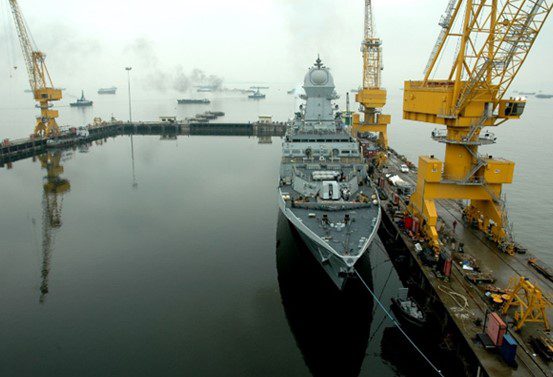
Mazagon Dock’s wet basin
Mazagon Dock Shipbuilders Limited (MDSL), the state-owned flagship of India’s naval construction capabilities, has broken ground on greenfield shipyards that could reshape the country’s defence-industrial map. The move marks a decisive shift from incremental refits at overburdened dockyards to a forward-looking infrastructure footprint capable of production and export at a global scale.
For decades, MDSL has symbolised both India’s engineering prowess and its limitations. Conceived as the cradle of warship production in Mumbai, the yard built destroyers, stealth frigates, and submarines under tight urban constraints. Land scarcity, urban congestion, and severe depth limitations meant that each new project required operational gymnastics. The state-owned shipbuilder’s output capacity never matched India’s naval ambition, which now demands larger tonnage, advanced propulsion, and smarter digital integration across platforms.
Tamil Nadu’s southern coastline, by contrast, offers what Mumbai cannot – space, tidal depth, and developmental headroom. The state’s industrial corridor is already home to automotive and electronics clusters that thrive on precise supply chains. The greenfield yard site—located close to the deep-draught waters of the Gulf of Mannar—provides proximity to international shipping routes and strategic chokepoints. The region’s accessibility to both eastern and western seaboards enables dual-theatre logistics, a crucial factor for an emerging blue-water navy seeking flexibility across the Indo-Pacific.
MDSL’s expansion plan represents a structural correction rather than an isolated industrial leap. India’s shipbuilding ecosystem has long been dispersed, Cochin Shipyard (in Kerala) builds aircraft carriers and large vessels; Garden Reach (in Kolkata) manufactures coastal frigates, Goa handles patrol corvettes, and Visakhapatnam (in Andhra Pradesh) manages naval support vessels. While this diversification broadened competencies, it fragmented economies of scale. Setting up a modern, integrated, greenfield shipyard—capable of modular block assembly, parallel slipway construction, and automated steel processing—could consolidate decades of scattered experience into one high-throughput industrial ecosystem.
Counter Measures are Half the Battle: Evolving Nature of Anti-drone Technology and Recommendations for India
Once dominated by slow-moving reconnaissance models, today’s drones range from cheap, disposable quadcopters used for smuggling and surveillance to sophisticated platforms enabling kinetic strikes, signal jamming, and swarm attacks. For India, which faces both state-sponsored and non-state drone intrusions across land and sea borders, counter-drone systems are rapidly emerging as central to defence planning and urban security architecture.
The changing nature of drone threats has exposed limitations in traditional air defence capabilities. Conventional radars and surface-to-air missiles were built to track and neutralise aircraft moving at high altitudes and speeds. Drones, conversely, often fly low, use composite materials, and boast minimal heat signatures that help evade legacy detection systems. Many commercial models operate autonomously with pre-programmed routes and obstacle-avoidance algorithms, making interception complex even after detection. India’s recent experience ranges from cross-border smuggling in Punjab to Pakistani armed drone incursions in the hundreds into Indian airspace during the first phase of Operation Sindoor.
Globally, anti-drone technology has four broad approaches: detection, identification, defeat, and forensic tracking. Detection combines advanced radars, radio frequency (RF) sensors, and electro-optical cameras to flag anomalies in airspace. Identification uses digital signature analysis and artificial intelligence to distinguish harmless drones from weaponised platforms. Defeat involves electromagnetic jamming, directed-energy weapons, and kinetic interceptors designed to disable, divert, or destroy intruding unmanned aerial vehicles (UAVs). Forensic tracking enables authorities to trace recovered drones back to controllers, manufacturers, or logistical supply points—vital for counter-terror investigations.
A major operational challenge for India is the sheer heterogeneity of threats. In border zones, smuggling groups deploy clusters of low-cost drones launched from across the fence, often programmed for single-use runs. Urban environments encounter advanced models piloted by skilled operators employing complex flight paths and encryption. In the maritime domain, drone incursions can appear suddenly over naval bases, attempting digital and visual surveillance. Each context demands a tailored defence response, complicating standardisation and procurement.
The next phase of progress in India’s anti-drone capability will hinge on three factors: ecosystem integration, public–private collaboration, and scalable policy innovation. Building a layered counter-drone “wall” combining military, aviation, and civilian infrastructure is likely the most optimal solution. Airports, refineries, power plants, and sensitive government facilities should be equipped with interoperable sensor grids, standardised data feeds, and AI-driven threat classification. For border zones, deploying mobile detection units that can shift coverage in real time is vital. In urban centres, integrating police response teams with direct sensor alerts can accelerate interception.
Private sector participation is also crucial. Firms specialising in AI, telecom, and power electronics offer expertise and cost advantages the state alone cannot provide. Developing indigenous electromagnetic pulse modules and optical countermeasures, licensed for both civilian and military use, improves both scale of deployment and cost-efficiency.
Drones Sweeping Mines: How the Indian Navy’s Capability Gap is l.ikely to be filled by AUVs
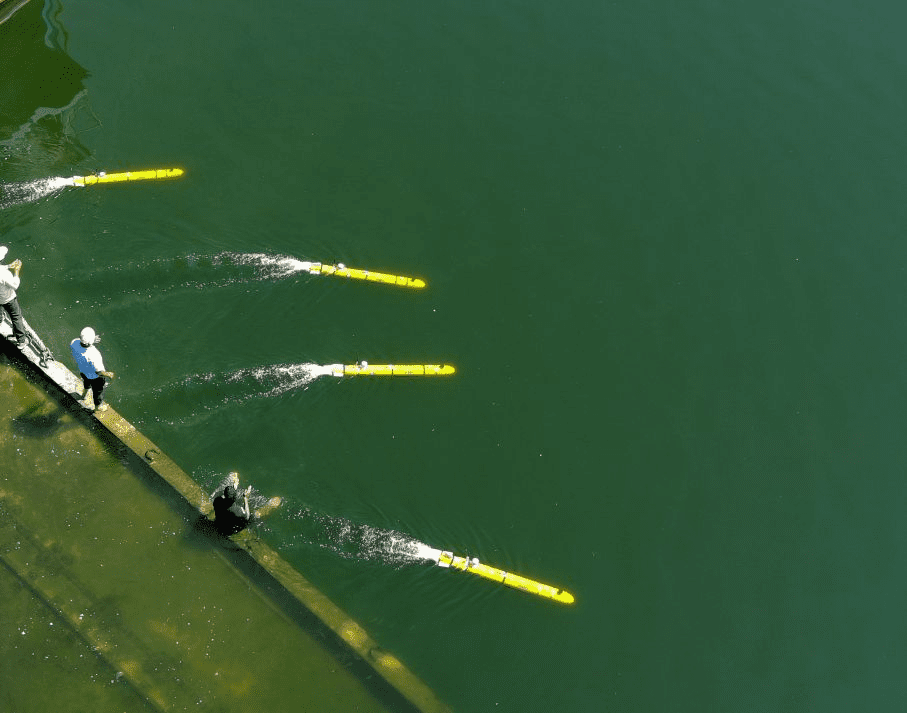
Retirement of the Indian Navy’s last manned mine countermeasures vessels in 2019 left a persistent capability gap in detecting and neutralising underwater threats. The capability gap is likely to promote a pivot towards unmanned systems like the Defence Research and Design Organisation (DRDO) developed Man Portable Autonomous Underwater Vehicles (MP-AUVs). Developed by the Naval Science & Technological Laboratory (NSTL) in Visakhapatnam, these AUVs integrate side-scan sonar and underwater cameras for real-time identification of mine-like objects, supported by deep learning algorithms for autonomous classification. Field trials in November 2025 at NSTL’s harbour have already validated core parameters, with a Ministry of Defence statement claiming production is possible within months through industry partnerships, offering a compact alternative to legacy platforms phased out nearly six years ago.
This shift addresses operational vulnerabilities amplified by heightened submarine activity from China and Pakistan in the Indian Ocean Region, where sea mines could disrupt critical maritime chokepoints. MP-AUVs enable networked operations via underwater acoustic communication, allowing multiple units to share data and enhance situational awareness while minimizing human risk and logistical demands compared to diver-dependent or manned sweeps.
While India’s Defence Acquisition Council has accepted the necessity for 12 new Mine Counter Measure(MCM) vessels which are likely to be built by state owned Goa Shipyard Ltd., and are likely to incorporate drone suites for integrated operations. These fiberglass-hulled platforms aim to restore fleet-level MCM capacity, but delays in past procurements, stemming from failed negotiations and policy shifts will not come fast enough in an environment of heightened national security concerns post the first phase of Operation Sindoor. However DRDO’s AUVs could partially bridge the capability gap in the interim. It is natural that at first integration challenges will persist, including scaling autonomy in cluttered underwater environments and ensuring compatibility with broader naval assets.
Furthermore, reliance on emerging drone technologies carries risks, for example Artificial Intelligence(AI) or algorithm driven classification may falter against sophisticated mines with low acoustic signatures, and production timelines could stretch amid supply chain constraints for sensors and batteries. However, similar risks are also present for any digital combat management system onboard a crewed conventionally sized naval vessel and is generally dealt with by ingenuity and training as well as top notch engineering skills by India’s armed forces during the new platform’s induction and sea-trials phase.
Precision in Small Quantities: How India’s Tactical Arsenal stands to be Bolstered by US Weaponry
With the US State Department’s approval of a $ 93 million sale of Javelin anti-tank missiles and Excalibur precision-guided artillery rounds, India is set to acquire a small tranche of tactical augmentation with systems that have seen operational use in Ukraine against Russia, a conflict which has emerged to be the closest to an all-out war between two countries that are somewhat similarly technologically equipped – thus making it the closest thing to a peer adversary test case. India’s order includes 100 Javelin Anti-Tank Guided Missiles (ATGMs) with 25 command launch units and 216 Excalibur precision artillery rounds, along with ancillary equipment and logistics support.
These acquisitions are likely meant as emergency procurement since the national security situation after the first phase of Operation Sindoor requires India’s armed forces to be battle ready.
On paper, the Javelin missile offers infantry a “fire-and-forget” capability to engage armoured targets up to 4 km away with infrared guidance and a top-attack profile – which is pretty much the highest standard of what can be expected from a man-portable projectile weapon.
The Excalibur artillery round which is compatible with India’s previously procured 155mm M777 ultra-light howitzers, provides GPS-guided precision over ranges exceeding 40 km, intended to deliver near-airstrike level accuracy in artillery bombardment. India first used Excalibur during Operation Sindoor in May 2025 to strike terrorist infrastructure along its borders, and its performance underscored a broader doctrinal shift toward precision-guided artillery munitions
However, the value of these acquisitions should be viewed in context. Both Javelin and Excalibur rounds come at a relatively high unit cost and depend on continued US logistical, technical, and software support – factors that may affect long-term sustainability. There is also the question of integration and training complexity within India’s broader arsenal, which still relies heavily on more conventional and Soviet-era platforms. The current deal is primarily an urgent replenishment, with ongoing discussions regarding potential co-production to lower dependency and costs.
From a strategic standpoint, the deal plays into the larger geopolitical framework of India-US defence cooperation, underscored by a recent 10-year defence partnership. Such purchases strengthen interoperability and access to advanced Western technologies but do not come with explicit offset or co-production commitments yet, raising concerns about how these systems will scale up in the Indian forces beyond the initial deliveries.
Considering the battlefield-tested status of these weapons, an argument exists for expanded procurement to bolster India’s anti-armour and precision artillery capabilities amid evolving threats in the region. Yet, this must be balanced with cost effectiveness, integration challenges, and the opportunity cost of diverting resources from indigenously development initiatives. India’s military planners may weigh increased orders against investments in domestic missile systems and artillery modernisation programmes to avoid over-reliance on foreign supply chains that are vulnerable to geopolitical flux. Larger procurement orders should consider the long-term impact on India’s defense industrial base, the nature of its threats, and the operational environment in the Indo-Pacific theatre.
Signals and Jammers: Tracking the Evolution of Electronic Warfare and what lies Ahead for India
The evolution of electronic warfare (EW) from rudimentary signal interception in the 19th century to sophisticated jamming and cyber capabilities in the 21st century reflects a technological trajectory shaped by the shifting dynamics of conflict and communication. Early instances of EW were limited to simple signal interception and manipulation, such as during the American Civil War and the Russo-Japanese War, where telegraph lines and rudimentary wireless transmissions became targets for disruption.
In the 20th century, the two World Wars significantly accelerated the development of EW. Radar systems emerged as critical assets, and countermeasures such as radar jamming and deception techniques were honed to impair enemy detection and targeting. During World War II, the British use of chaff to confuse German radar installations was a landmark example. The Cold War further increased the sophistication of EW with the proliferation of electronic intelligence (ELINT) and electronic countermeasures (ECM) encompassing signal jamming, spoofing, and interception across radio, radar, and early satellite communications.
The 21st century has seen EW expand beyond traditional electromagnetic spectrum operations into multifaceted domains involving cyber-electromagnetic activities (CEMA). Modern EW capabilities now integrate computer network attacks, cyber defense, and advanced signal processing to disrupt adversary command, control, communications, computers, intelligence, surveillance, and reconnaissance (C4ISR) systems. This evolution is driven by digitalisation and convergence of the cyber and electronic domains, making EW a critical tool in both conventional and asymmetric warfare.
India’s pathway in EW technology mirrors broader trends of modernisation but carries unique strategic imperatives driven by regional security dynamics and technological ambitions. Historically dependent on external suppliers and legacy equipment, India has increased investment in indigenous development as well as acquisition of advanced EW systems, including mobile jammers, direction-finding units, and signal intelligence platforms. Tensions with China and military action against Pakistan during Operation Sindoor have underscored the operational necessity for robust EW capabilities to disrupt enemy communications and surveillance in mountainous and electronically-cluttered environments.
India has been developing a broad family of EW systems through DRDO and Bharat Electronics Limited (BEL), aimed at covering battlefield needs across land, air, and difficult terrain. Key land-based platforms include Samyukta, a multi-role EW suite used for intercepting and disrupting hostile communications and radar signals; Dharashakti, which offers roughly 300 km-class reach for spectrum monitoring, signal interception, and high-power jamming with anti-drone capability; and Divya Drishti, which supports similar multi-terrain operations with a focus on electronic intelligence gathering. Systems designed for specialised environments include Himshakti, which is optimised for mountainous regions. These elements are integrated through BEL’s Integrated Electronic Warfare System (IEWP), which provides interception, location tracking, and jamming capabilities across plains, deserts, and mountains, all connected through secure command-and-control networks. India has also fielded airborne solutions such as the Swayam Raksha (SRK) suite for the Tejas Mk-1A which combines radar warning sensors, digital jamming pods, and multi-band threat detection to protect aircraft during contested operations. At the strategic level, airborne early warning is supported by the Netra Mk-1 AEW&CS, which can detect aerial targets at roughly 250–375 km and provide electronic support measures with high direction-finding accuracy for cooperative engagement and networked operations.
As compared to leading foreign systems, India has made clear advances in modularity, indigenisation, and adapting EW tools to regional requirements, but it still trails in raw power output, range, depth of threat libraries, and levels of automation. For example, Dharashakti’s range is broadly comparable to Russian platforms like the Krasukha-4 (also around the 300 km class), yet the latter can generate more aggressive effects intended to degrade onboard avionics and fifth-generation fighter sensors, whereas Indian systems typically focus on selective disruption. Airborne suites like SRK represent a clear advance over the legacy systems fitted on earlier Indian aircraft and are broadly competitive with regional offerings, though they still remain a work in progress when measured against Western benchmarks such as Israel’s Spectra suite.
Looking ahead, India’s EW strategy is poised to embrace emerging technologies like artificial intelligence (AI), machine learning, and quantum computing to enhance real-time signal analyses, autonomous threat response, and resilient spectrum operations. The integration of EW with space-based assets and drones is expected to provide new avenues for electronic attack and defence capabilities.
Furthermore, India’s future EW posture will likely be characterised by layered defenses capable of jamming, deception, and cyber-electronic fusion, tailored to its specific theatre needs across land, sea, and air. Investments in research and development and public-private partnerships, alongside strategic imports and co-development, will shape India’s ability to leverage EW as a force multiplier in its security architecture.
Accidents and Displays: How Tejas’s Export Prospects are likely to be Unhurt despite the Dubai crash
A Tejas fighter jet of the Indian Air Force crashed during a low-altitude maneuvre at the Dubai Airshow on 21 November 2025, killing pilot Wing Commander Namansh Syal and prompting a court of inquiry to probe the cause. The aircraft, third in the display sequence, nosedived around 2:15 pm local time, erupting into a fireball near Al Maktoum International Airport amid a crowd of spectators, with emergency teams responding swiftly. This incident marks the second recorded Tejas accident, highlighting risks inherent to high-performance demonstrations in the jet era, where even mature platforms face scrutiny during export showcases.
Airshow crashes have shadowed jet propulsion aviation since the post-World War II period, often tied to aggressive maneuvres pushing aircraft envelopes. The Farnborough Airshow in 1952saw a de Havilland DH.110 disintegrate mid-air, killing 31 on the ground as well as the crew due to structural failure during supersonic passes. In 1988, Italy’s Ramstein disaster claimed 70 lives when Frecce Tricolori jets collided, scattering debris into the crowd, while in 2002 an Ukrainian Su-27UB crashed at Sknyliv killing 77 spectators after the pilot lost control in a low-level routine.
Much of the iconic exported fighters carry accident histories at airshows that test their manufacturer’s operational maturity. The US’s Lockheed Martin-made F-16 Fighting Falcon, sold to over 25 nations, has had multiple incidents, including a Polish F-16 crash during the Radom Airshow rehearsals 2025 and a US Thunderbirds F-16 mishap in 2003 caused by misinterpreted altitude in a Split-S maneuver. France’s Rafale experienced a pre-airshow practice crash in 2009 that was attributed to pilot error in tight turns, while Russia’s Su-30 and Su-27 variants have faltered in displays. Yet these platforms maintain strong export records despite the accidents, with inquiries driving refinements. Similarly for Tejas, while the cause of the crash is yet to be determined, the export potential for the platform is unlikely to be affected as has been the case for almost every popular fighter type from either the NATO stable or the former Eastern Bloc.
Check these out:
- “What Safety Rules Govern Air Shows?” BBC News, 24 August 2025. URL: https://www.bbc.com/news/magazine-34038649
- Boffey, D.. “Killing Machines: How Russia and Ukraine’s Race to Perfect Deadly Pilotless Drones Could Harm Us All.” The Guardian, 25 June 2025. URL: https://www.theguardian.com/world/2025/jun/25/ukraine-russia-autonomous-drones-ai
- Grassano, C. ‘Excalibur: Precise, Lethal and Cost-Effective.’ USAASC, July-August 2004. URL: https://asc.army.mil/docs/pubs/alt/2004/4_JulAug/articles/26_Excalibur-Precise_Lethal_and_Cost_Effective_200404.pdf
- John, N., O. Chavan, M. Parab, et. al. ‘Underwater Object Detection Using Drone.’ International Journal for Research in Engineering Application & Management 10 No. 02(2024): 160-166. URL: https://ijream.org/papers/IJREAMV10I02110047.pdf
- Larsen & Toubro. (n.d.). Defence Shipbuilding: End-to-End Solutions (Chennai: Larsen & Toubro). URL: https://corpwebstorage.blob.core.windows.net/media/42123/defence-shipbuilding-main-brochure.pdf
- Marson, J. ‘How Ukraine Built a Weapon to Control the Black Sea.’ Wall Street Journal podcast, 26 June 2024. URL: https://www.wsj.com/podcasts/the-journal/how-ukraine-built-a-weapon-to-control-the-black-sea/b073366d-8027-48d4-8964-d725554428f4
- Mitchell Institute for Aerospace Studies. ‘Space Electronic Warfare: Key to Modern Combat Operations’, YouTube podcast, Episode 179. Saturday Apr 20, 2024. URL: https://mitchellinstituteaerospaceadvantage.podbean.com/e/episode-179-%E2%80%94-space-electronic-warfare-key-to-modern-combat-operations/
- ‘Space Warfighting: Key Insights’. YouTube podcast, Episode 256, September 2025. URL: https://www.mitchellaerospacepower.org/podcast/space-warfighting-key-insights/
- MoneyControl. ‘Tata, Kalyani Explore Routes Beyond HAL for 5th-Gen AMCA Fighter Programme: Report. MoneyControl, 24 September 2025. URL: https://www.moneycontrol.com/news/business/tata-kalyani-explore-routes-beyond-hal-for-5th-gen-amca-fighter-programme-report-13577378.html
- Mizokami, K. ‘Ukraine’s Javelin Missiles Have a New Specialty: Shooting Down Russian Cruise Missiles.’ Popular Mechanics, 13 October 2022. URL: https://www.popularmechanics.com/military/weapons/a41601259/javelin-missile-launcher-takes-on-cruise-missiles/
