
Intersect: Africa
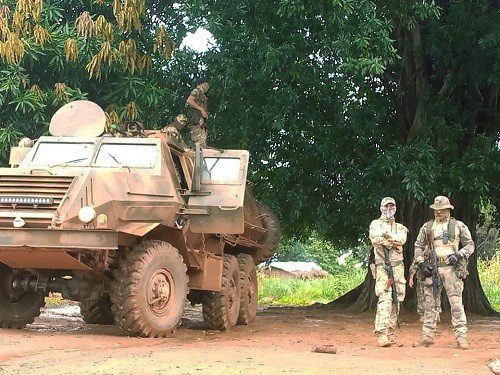
Wagner Group Mercenaries in the Central African Republic
Source: By Corbeau News Centrafrique, CC BY-SA 4.0,
Welcome to this edition of Intersect: Africa. This month, we examine India’s growing footprint across the African continent through energy investments, digital partnerships, and strategic outreach, while also tracking where global powers like Russia are positioning themselves on the African chessboard. We spotlight how shifting alliances, security ties, and economic deals are reshaping Africa’s global standing. And in a bittersweet turn, we look at why your favourite desserts might soon cost more as Ivory Coast’s cocoa farmers demand a fairer share in the global chocolate economy.
1. India’s Energy Playbook in Africa: Risk, Investment, and Rising InfluenceIndia has announced a $180 million investment. to revive stalled LNG exploration in Mozambique’s Rovuma Basin, a strategic move in one of Africa’s most gas-rich zones. The force majeure order that halted the project in 2021 after a major terrorist attack, may be lifted soon, according to Rajarshi Gupta, Managing Director of ONGC Videsh Ltd. ONGC Videsh plans to commission its $20 billion Mozambique LNG project by late 2027 or early 2028..
Mozambique’s Rovuma Basin is estimated to contain over 100 trillion cubic feet of recoverable natural gas. Area 1 of the basin, where India holds a 30% stake through ONGC Videsh and Bharat Petroleum, is projected to produce up to 12.88 million tonnes per annum (mtpa) of LNG.
According to Dr. Lauren Johnston, a China-Africa analyst and Visiting Fellow at the South African Institute of International Affairs (SAIIA), India’s push comes amid rising international competition, particularly from China, whose footprint in African energy markets continues to deepen.
Yet, the investment is not without risk. Cabo Delgado province in northern Mozambique where Rovuma is located, has been plagued by militant violence, largely orchestrated by the Islamist group Ahlu Sunnah wa Jama’ah (ASWJ), affiliated with the Islamic State (IS). Although the insurgency has weakened in recent months, security threats persist.
India, currently the world’s fourth-largest importer of LNG, aims to increase the share of natural gas in its energy mix from 6% to 15% by 2030. The Rovuma investment forms part of this broader energy diversification strategy. However, it is distinct from India’s broader credit diplomacy in Africa, which has seen the allocation of more than $12 billion in concessional Lines of Credit to 42 African nations over a decade up to 2023 across sectors such as infrastructure, energy, and capacity-building. Unlike investments, these credit lines are loans extended to governments, not equity or operational stakes in projects like Rovuma.
2. Russia’s Deepening Intervention: Wants Wagner replaced with state-run forceIn June 2025, the Russian Foreign Ministry announced plans to deepen military cooperation with African states, including what it described as “sensitive” security ties. These bilateral security partnerships typically involve military training, arms transfers, and technical assistance.
A central actor in these operations has been the Wagner Group, a private military company with longstanding links to the Russian state. Wagner has deployed personnel in countries such as Mali, the Central African Republic (CAR), Libya, and Sudan. These deployments have often followed drawdowns of Western or UN peacekeeping missions, and have been typically structured through direct agreements with host governments.
Wagner’s involvement has extended beyond combat support to include protection for political figures and securing access to natural resources. In CAR and Sudan, Wagner-linked companies have reportedly received gold and diamond mining concessions in exchange for security services.
However, the Russian government has now begun to pressure the government of the CAR to replace Wagner with the Africa Corps, a private military company that is directly controlled by the Russian Ministry of Defence. Moscow is also demanding that these mercenaries be paid in cash, instead of minerals.
The CAR government is hesitant to accept these new terms and conditions. Wagner has had an old and successful relationship with President Faustin Archange Touadera, having assisted him in winning a constitutional referendum in 2023.The CAR is mineral-rich but cash-poor and the government may find the new payment terms demanded by Russia unsustainable.
Wagner has been led since 2023 by Pavel Prigozhin, the son of Yevgeny Prigozhin, the Russian oligarch and mercenary leader who attempted a failed rebellion against President Vladimir Putin, and was killed in a plane crash along with several top Wagner leaders two months later.
3. Digital Bridges: Why it’s Time for an India–Africa Digital CompactIndia and Africa are exploring deeper collaboration in digital public infrastructure (DPI), building on shared development priorities and increasing digital demand across the continent. With Africa advancing its AU Digital Transformation Strategy (2020–2030) ,India has positioned its open-source DPI stack, Aadhaar (ID), UPI (payments), and Digi Locker (e-documents) as a potential model for cooperation.
At the G20 DPI Summit in March 2024, African Union representatives endorsed India’s approach to scalable, low-cost digital systems. Since then, the Indian Ministry of External Affairs has reported increased interest from African nations in adapting components of the India Stack to local needs. Countries including Kenya, Ethiopia, and Mauritius have initiated discussions on integrating digital ID and payment systems, focusing on governance, social transfers, and financial inclusion.
As of June 2025, more than 40 African countries have expressed interest in collaborating with the One Future Alliance, a global partnership championed by India to advance DPI. India plays a pivotal role by offering support through technical training, regulatory consulting, and sandbox pilots, delivered via the ITEC programme and bilateral digital diplomacy efforts.
4. Africa’s Critical Mineral Moment: Closing the Exploration GapAfrica holds over 30% of the world’s reserves of critical minerals, cobalt, lithium, manganese, and rare earths that are essential to the global energy transition. Yet, the continent continues to attract less than 5% of global exploration investment, as a report by CSIS highlighted in June 2025. This stark mismatch underscores the urgent need for improved geodata, harmonized policies, and regulatory reforms to unlock sustainable and equitable investment.
The African Mining Vision, endorsed by the African Union, reinforces a continental ambition to build local beneficiation, environmental sustainability, and cross-border infrastructure. Countries like the Democratic Republic of the Congo (DRC), Namibia, and Zimbabwe have moved to restrict exports of unprocessed lithium and cobalt, signaling a shift towards domestic value addition.
India, too, has entered the fray with increasing strategic intent. eUnder its Critical Minerals Strategy (2023), the Indian government has identified 30 key minerals and initiated engagements with African partners. In early 2025, Indian delegations held talks in Zambia and the DRC to advance cooperation on lithium and cobalt. Prime Minister Narendra Modi’s landmark visit to Namibia in July, the first by an Indian PM in more than three decades, underscored the deepening economic and geopolitical ties between India and mineral-rich African states. The visit included discussions on sustainable mining, wildlife conservation, and strategic alignment.
5. Indian Oil Imports: Looking to Africa as Diplomatic Cloud over Russian Crude DarkensThrough a tender awarded recently to the international commodities trading company Trafigura, the Indian Oil Corporation (IOC) acquired one million barrels of Nigerian Agbami oil for delivery in September. In recent weeks, Indian refiners have acquired millions of barrels from non-Russian sources as part of a broader buying strategy. The second-largest state refiner, Bharat Petroleum Corporation Limited (BPCL), has undertaken spot purchases for September delivery.
Nigeria, Algeria, Angola, Cameroon, DRC, Equatorial Guinea, Gabon, Ghana, and Libya are the major African countries from which India receives crude oil.
Mozambique, and South Africa. LNG is imported from Nigeria, Angola, Cameroon, Equatorial Guinea, and Mozambique.
The diversification of India’s crude oil imports comes amid growing geopolitical pressure, particularly from the United States. President Donald Trump has imposed 50 per cent tariffs, the world’s highest, on Indian exports to the US, including a 25 per cent “penalty” for buying discounted Russian oil, which he says is helping fund the war in Ukraine. For India, however, securing affordable and reliable energy is a strategic necessity: its economy depends heavily on imported fuel, and a disruption in supplies could have significant domestic industrial consequences.
Increasing purchases from African producers not only reduces exposure to sanctions-related risks, but also strengthens ties with resource-rich partners who are eager to expand their market share. From Africa’s perspective, India’s pivot presents an opportunity to deepen trade links, diversify its customer base beyond China and Europe, and secure long-term export arrangements with one of the world’s fastest-growing energy markets.
6. Demand for Sweet Justice: Cocoa Farmers in Ivory Coast Push for a Fairer DealIvory Coast, the world’s largest producer of cocoa, is pushing for better prices and greater control over exports of the crop as international markets reach record highs. According to a Bloomberg report from June 2025, the country’s government is responding to growing pressure from farmers and cooperatives ahead of presidential elections due in October 2025, and demanding reforms to ensure a more equitable share of value in the global cocoa supply chain.
Although cocoa is trading at historically high prices, smallholder farmers in the West African nation continue to be saddled with low incomes and limited pricing power. The current system disproportionately benefits multinational traders and chocolate manufacturers, with producers capturing only a small fraction of the final retail value. Rural communities are now demanding transparency, a larger share of profits, and support for local processing.
The government’s response is part of a wider African trend towards commodity sovereignty, value addition, and trade equity. The revival of price controls and stronger oversight over export contracts aim to correct longstanding imbalances in the cocoa sector.
While this development is specific to West Africa, it aligns with broader Global South efforts to restructure commodity markets in favour of producers. The case of Ivory Coast underlines how international prices, domestic politics, and trade reform may be converging, especially in agriculture, to reshape economic narratives on the continent.
Further Reading- Presidential Pressure Aims to Break an African LNG Gridlock-Read
- It’s Déjà Vu for South Africa’s Perpetually Teetering Alliance-Read
- Trump Shifts Focus ‘From Aid to Trade’ at Africa Summit-Read
- Algeria eyes Russia’s SU-34M for purchase – Read
- First Malaria treatment for babies approved-Read
- Solar Mini grid brings light and hope to a Goma neighborhood, offering blueprint for rest of Congo-Read
Thank you for reading. Stay tuned for the next edition of Africa Insights.