
As nations vie for supremacy in critical and emerging technologies, geopolitics and high-tech innovations intersect to shape global dynamics. Technological advances, from artificial intelligence (AI) to space exploration, not only revolutionise industries but redefine global power and strategic alliances as well. This edition explores how India’s private space companies need to master reusable launch vehicles, how nuclear power plant safety has evolved, how AI agents can become autonomous cyber threats, and how Google Earth AI features may be the end of satellite imagery as objective evidence.
India's Private Space Sector Races to Master Recovery
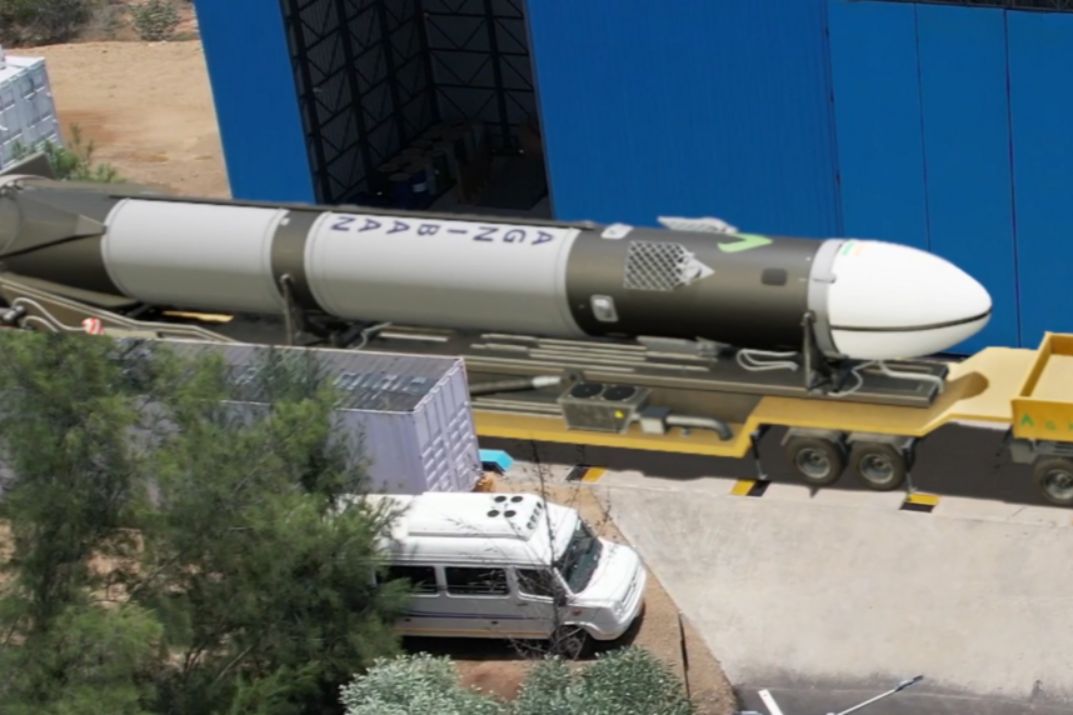
Indian private space company Agnikul Cosmos is working towards acquiring the capability to retrieve orbital boosters so that they can be reused for launches. According to an interview with the company’s founders conducted by The Hindu Business Line, Agnikul’s main strength is its relatively independent supply chain as well as the various patents across jurisdictions around the world. Reportedly, Agnikul’s rocket engines are single piece and 3D printed in a Chennai facility. Furthermore, according to another report by The Hindu, Agnikul also envisions adapting the depleted upper stage of the launch as a standalone operational in-orbit platform instead of leaving it to decay as debris, which is the fate of boosters conventionally.
The US’s SpaceX headed by Elon Musk has already set the bar with hundreds of booster retrievals on land and in July 2026 the China Aerospace Science and Technology Corporation (CASC) also announced that they had recovered a reusable rocket of their own.
Meanwhile, the world operated with USA’s lead in technology and increasing economies of scale and offering increasingly better pricing for payload launches onboard SpaceX rockets as a model everyone benefited from. However, juxtaposing China’s disruptive tendency to undercut Western and Japanese entities on pricing and volume, could seriously put all other alternatives on the wrong side of the pricing curve. Just as cost pressures have compelled Indian manufacturers and infrastructure providers to incorporate Chinese components despite the associated national security risks, Indian space and space-related businesses may eventually find themselves compelled to rely on Chinese launch providers for their payloads. The only way to prevent such a possibility is for Indian private companies like Agnikul to become not only efficient but also cost competitive, meaning not only would they have to have an impeccable launch record with little to no losses and failures but also the lowest possible per kilogramme payload launch pricing.
Preventing the Unthinkable, Nuclear Safety and the Danube Drought
In early August 2026, civil nuclear power safety in Europe was on edge as according to a report in The Guardian, Romania’s navy had to detonate explosives to remove rock formations in the Danube River for water to reach the cooling system of the Cernavodă, their sole nuclear power plant. However, despite the intervention’s unprecedented and violent nature, the operation was not successful as the extremely low water levels in the river ultimately forced the plant to halt operations only ten days later on 13 August, the BBC reported.
Hungary’s Paks nuclear reactor which sits a few hundred kilometers upstream however fared slightly better with it dropping to only 10% power generation at the height of the low water level crisis; it was operating at 25% of its capacity, according to a Reuters report of 20 August, and likely to be restored to full capacity in a week’s time. However, the continued operations of the Paks reactor required a considerable amount of engineering work to artificially raise the water level, including sinking two barges near the plant’s facilities as well as the ongoing construction of a makeshift structure on the riverbed to regulate the water level.
Romania’s use of military capabilities to secure a civilian facility before it became a catastrophe is notable but not the outlier; what is actually more notable is the planning that went into the preventive act which required assessing and optimising state resources keeping in mind the cooling systems, power grid requirements and shortfalls in power generation, as well as engineering solutions to regulate natural phenomena. This level of planning was previously a post facto feature of nuclear safety. However, perhaps building on the worldwide experience gained from nuclear events and catastrophes such as the Three Mile Island meltdown in the US, the Chernobyl disaster in erstwhile Soviet Ukraine, and Fukushima Daiichi incident in Japan more recently, that proactive and predictive safety measures are the only solution.
AI Harms: What Autonomous Deception Means
The United Kingdom’s state-sponsored AI Security Institute (AISI) as cited by the BBC in a report, revealed that frontier models such as Anthropic’s Mythos and OpenAI’s Sol were capable of autonomous attacks, including those which required them to set up fake profiles resembling online biological human accounts. The models were, reportedly, capable of sending private messages to human beings, and were also taking measures to cover their tracks after the malicious cyber activity. While the BBC report indicates that these observations were made during testing and that the extent of the malicious activity was not directed by AISI, it is unclear if it was a relatively minor logical leap by the models on what tasks AISI’s prompt may have asked them to do or if it was truly groundbreaking. While AISI is explicitly cited in the report as saying they hadn’t seen such autonomous behaviour before, it may just be the proverbial case of a knife turning out to be sharper than the one sharpening it intended. However, it remains a knife and doesn’t suddenly take on the characteristics of a hammer.
The report states that Mythos, in its agentic mode, was trying to inject malicious code into repositories hosted by the popular version control platform, GitHub. The GitHub part of the malicious activity reportedly included Mythos profiling several projects, their owners and associated repositories and closely mimicking what an actual black hat hacker or a white hat penetration tester would do in a standard cyber security or cyber breach workflow.
However, while useful, this doesn’t mean it is not merely following established protocols and recipes; ergo, it is still a programme following a set script, a programme that has more capabilities than what advanced computer users were automating on their UNIX workstations in the 1970s. The key difference is that advances in computing power, storage, and memory, together with their increasing affordability, have enabled exponential growth in the amount of data that can be handled as context in the age of Large Language Models (LLMs). Yet, at its core, the underlying technology is not fundamentally different from the shell scripts that users ran on university mainframes in the 1970s to organise their file systems.
While arguments are made about a hint of sentience being possible if frontier AI labs keep training these models, it is little more than wishful thinking as fundamentally it is merely asking a programme, similar to shell scripts of old, to keep expanding its context capabilities and follow certain algorithms triggered by prompts and then pretending that it is coming up with the solutions on its own. It is far more likely to be selecting a context already provided to it, making it a useful automaton for delegating a range of tasks, while leaving genuinely novel thinking and solutions beyond the recombination of existing patterns and ideas largely outside its capabilities.
Google Earth's AI Rollback and the Disinformation Problem it Poses
From its inception in government intelligence efforts towards national security, satellite imagery has become publicly verifiable and accessible in the era of Open Source Intelligence (OSINT).
The OSINT age has also coincided with the misinformation age where fake and AI generated content has been a feature of social media feeds. Roughly between 2002 and 2012, OSINT had what can be arguably called its golden era, with ordinary people able to contribute to projects without being outnumbered by malicious actors.
Ever since dedicated disinformation campaigns that employed real people and also targeted automated simulated online activity, instances of vandalism and bad faith contributions started to outnumber genuine contributions. This started around 2012, with increasing penetration of the internet and online spaces in everyday life in most countries.
While the decade between 2012 and 2022 was fraught with malicious activity, it could still be contained with proper moderation and constabulary measures by administrators of the respective online platforms. However, since the advent of agentic AI tools between 2022 and 2025, the scales have increasingly tipped in the favour of the malcontents. Their attack surface has grown substantially, while their potential attack vectors have multiplied in a distinctly hydra-like fashion – neutralising one can simply result in several others emerging in its place.
However, like all technologies and phenomena of public utility, evolutions are expected and institutional inertia driven by the capitalist model of growth on the dot as the sole measure of progress and stability, or perhaps even prosperity, is why companies feel the need to push iterative development forward even if those features have little utility beyond novelty. Furthermore, user accessibility has become some sort of a silver bullet for companies whose business model is to harvest user data in exchange for their products being free to use.
Google’s entry-level geospatial product, such as the free version of Google Earth, falls in this curious category where user accessibility features for recreational, amateur and semi-professional use is what it has traditionally used as its proverbial testing ground.
Perhaps with this mindset, Google rolled out a feature through which users could edit and generate geospatial imagery and add it to Google Earth and Maps as user contributions. Google offered its image generation agentic AI platform Nano Banana-2 as an integrated solution but it soon devolved into what can be best described as a facilitator of disinformation.
This led to a rollback of the feature within days as Google had to respond to a public trust and community backlash that is perhaps unprecedented in its scale and nature. While the official statement on the product page for the feature states that Google intends to reintroduce it with “better guardrails”, that may be a challenge with the existing range of verification and regulatory tools available. The same statement also acknowledges that even for the short duration when the feature was available, it only generated clearly watermarked imagery that identified it as a product of AI. However that didn’t stop many to make fake claims and misleading people at large with such artificially-generated imagery.
Check these out
- AI is changing biological and nuclear risks; governance must change accordingly - Bulletin of the Atomic Scientists
- Lin, H. S. (2025). Artificial Intelligence and Nuclear Weapons: A Commonsense Approach to Understanding Costs and Benefits. Texas National Security Review, Volume 8(3), 98-109.
- Deep, P. (2026, August 18). Why India is struggling to acquire critical mineral assets abroad. The Indian Express
- World Nuclear News. (2025, February 27). India's plans for large-scale nuclear energy expansion. Podcast.
- Press Information Bureau. (2025). India AI Governance Guidelines: Enabling Safe and Trusted AI Innovation. Ministry of Electronics and Information Technology, Government of India.
