One year ago, Indian foreign policy could be summed up as: engage America, manage China, cultivate Europe, reassure Russia, bring Japan into play, draw neighbours in, extend the neighbourhood, and sustain traditional partnerships. That framework offered both clarity and manoeuvrability.
Today, however, every one of those tasks is more complex.
The pre-Munich environment was marked by managed competition. The United States and China remained locked in rivalry but constrained by economic interdependence. Europe oscillated between transatlantic dependence and the pursuit of strategic independence. India leveraged the global flux through calibrated multi-alignment. But beneath this equilibrium, deeper structural changes were underway. Supply chains were hardening, technology ecosystems were fragmenting, and geopolitical competition was extending into economic and industrial domains.
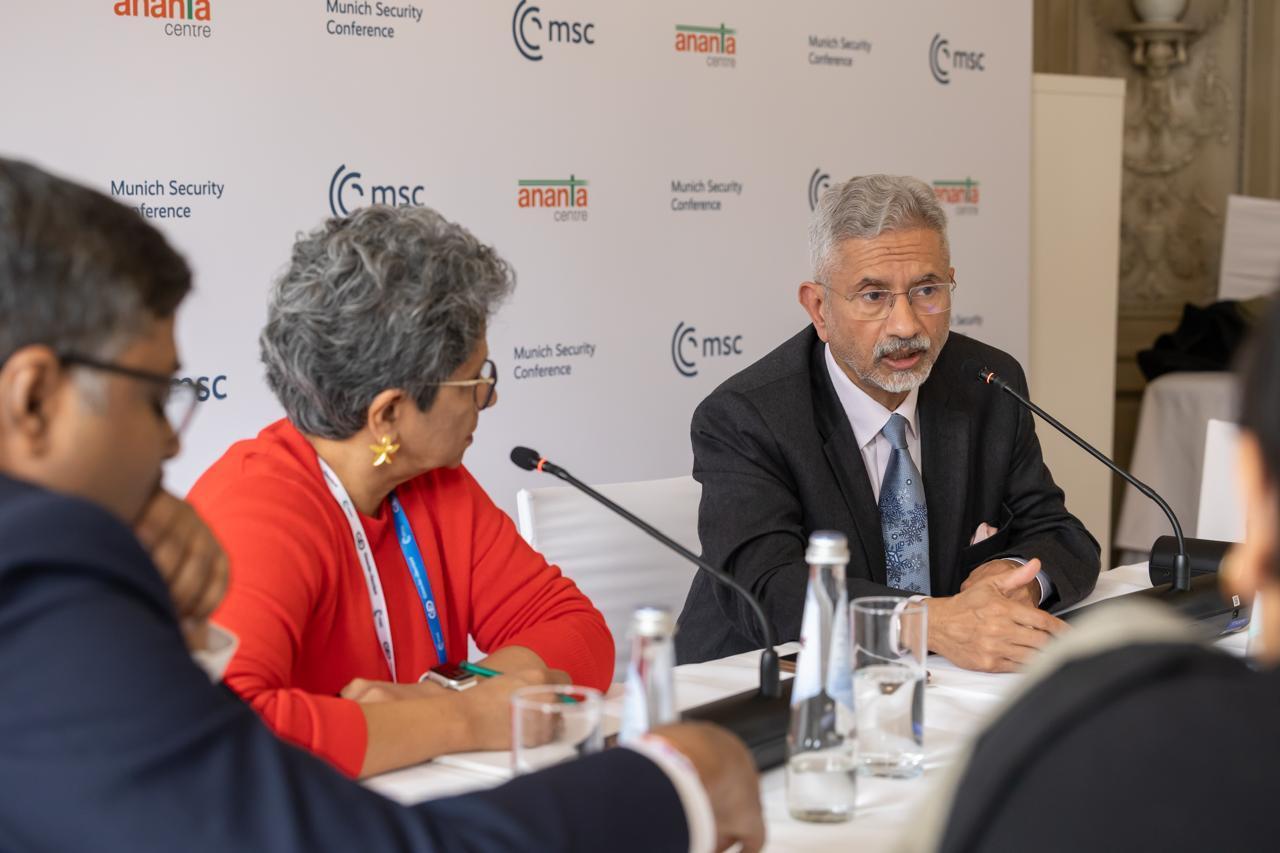
Reflections from Munich 2026: Europe Reckons with Choices familiar to the Global South
For NATO countries, multipolarity has arrived. This multipolarity is neither stable nor slow-moving. It is dynamic, fluid, and constantly shifting. Like being on multiple trapezes at once, it demands continuous adjustment and balance.
This diagnosis echoed themes articulated at Davos by PM Mark Carney, who warned of a transition from a rules-based globalization toward a fragmented system characterized by competing economic blocs, strategic de-risking, and politicized capital flows. Carney’s emphasis on the breakdown of a singular global economic order, and the rise of parallel systems of finance, technology, and trade, found clear resonance in developed economies of the western hemisphere.
In response, the United States emphasized that they were de-risking without decoupling, particularly in technology and supply chains. European leaders broadly aligned with this framing but with more caution, reflecting economic exposure to China. China, in turn, rejected the language of de-risking while signalling continued efforts to build alternative networks across the Global South.
This produced a visible asymmetry:
- U.S. position: coalition-based technological and economic security as existing relationships fracture
- European position: partial alignment with the U.S., tempered by an economic pragmatism that came on suddenly but is filtering in policy glacially
- Chinese position: opposition to bloc formation, coupled with parallel institution-building
- Global South: selective engagement with all sides, resisting exclusivity.
While the calculus at hand has changed for the entire world, only Global South countries have retained the central tenet of their policy approach: resilience based on diversity. India, notably, is seen to be at the top of the list of countries successfully espousing this philosophy.
In 2026, the preference towards building coalitions of interest over being bound to value based alliances has gone from being perceived as the transactional cop-out of the weak to the restrained balance of the clear sighted. A perspective shift that occurred once Europe faced choices that echoed the long-held concerns of emerging economies.
Munich clearly highlighted that Carney’s warning of a system where economic and geopolitical logics increasingly overlap triggered an epiphany for European powers who now consider “middle powers” and “growing economies” as essential vectors of their growth and security.
Institutional Transition, Strategic Reordering and the Regionalization of Responsibility
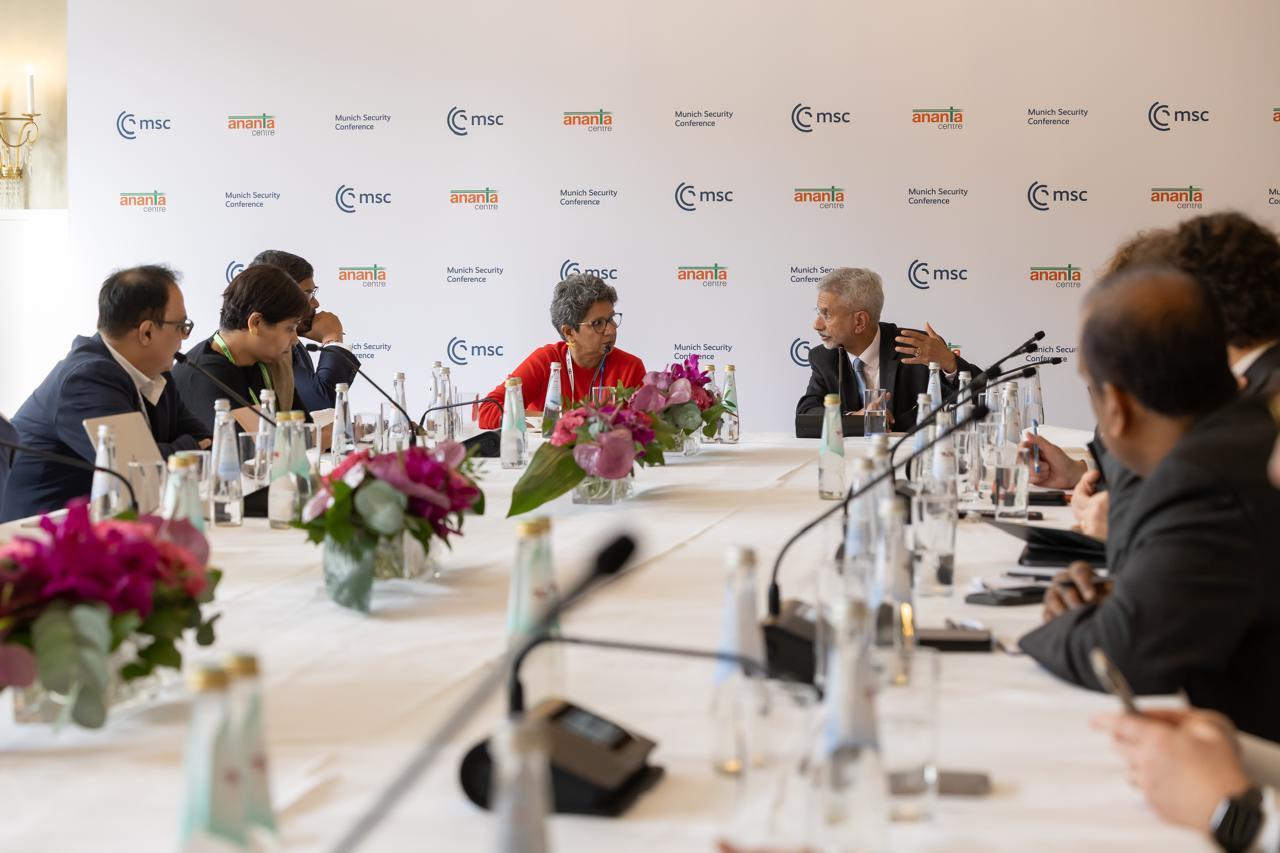
The Ananta roundtable concluded that this multipolar world will also be more regional. The largest powers won’t intervene everywhere. Regional actors will shoulder more responsibility in managing their own neighbourhoods. European leaders will focus heavily on continental security and autonomy. The United States will seek to strengthen the western hemisphere while encouraging allies to take greater ownership elsewhere. China will pursue greater regional connectivity and influence through economic instruments. India, by necessity, will be looked upon as a primary security and stability provider in the Indian Ocean and its extended neighbourhood.
The roundtable, and the Conference at large, reinforced a growing scepticism toward existing multilateral institutions. If major powers recalibrate, bodies like the WTO or UN system cannot remain untouched. Some may be reshaped; others reinvented. Western leaders acknowledged institutional paralysis, while others highlighted inequities in representation and governance. Parallel mechanisms, whether in trade, finance, or technology governance, are increasingly filling these gaps.
Where Does India Stand?
In the past year, the most notable success for India has been Europe. The EU-India FTA was not simply a trade arrangement, it was a strategic unlock. Without an FTA, Europe doesn’t take India seriously despite pleasing statements by EU leaders. With it, the ceiling lifts. With bilateral trade already at roughly €220 billion, and enormous room for growth, the relationship now carries deeper geopolitical weight. Europe’s use of trade agreements as instruments of foreign policy underscores this shift. Securing the FTA was foundational to deepening the relationship.
Europe’s evolving posture was evident: the continent is undergoing a strategic reawakening. Its gradual movement toward greater defence spending, industrial policy coordination, and geopolitical engagement suggests it may emerge as a more cohesive pole, though still heavily aligned with Washington on most fronts.
India-U.S. relations have faced episodic turbulence, particularly on trade. Yet, structurally, it remains sound. Even during periods of friction, the institutional architecture: bureaucracies, departments, systems, continued functioning. The trade relationship itself illustrates a distinctive mode of diplomacy. For India, the U.S. trade deal followed a bottom-up path: thousands of detailed lines negotiated before securing a headline number. This was cumulative diplomacy, layer upon layer, until momentum carried it forward to a framework announcement in early February. A process that slowly established clear red lines for both sides while letting critical pipelines like NISAR, defence framework, and Pax Silica continue unabated. The relationship has suffered in the past year but has now arrived at a place of comprehension regarding the priorities and potential of each side.
On China: expectations have recalibrated. Stability itself has been an achievement. After the disruptions of the 2020 border crisis, recent arrangements, particularly on patrolling, have largely held.
For India, with both the US and China, technology governance has emerged as a central axis of managing competition. The move into the AI era feels natural but it cannot be left entirely to market forces. Risk management and governance will be central. The convergence of AI, data, and industrial policy reinforces the need for India to shape, not merely adopt, global norms.
Russia remains part of the Indian equation, even amid difficult global circumstances. India’s approach continues to emphasize diversification without abandonment. The underlying objective for India stays unchanged: maintain optimal positioning across major poles while strengthening both immediate and extended neighbourhoods.”
India’s regional engagement is expanding: ASEAN, the Gulf, Africa, Latin America. In parts of Latin America, India has quietly become among the top three trade partners. A shift that happened gradually, then suddenly. This expansion reflects a broader structural trend. As global competition intensifies, secondary theaters become primary arenas of influence.
India’s earlier strategy, engaging all poles while avoiding entanglement, delivered flexibility. But in a system defined by structured competition, flexibility alone is insufficient. The task now is to move toward selective alignment, institutional leadership, and capability-driven autonomy.
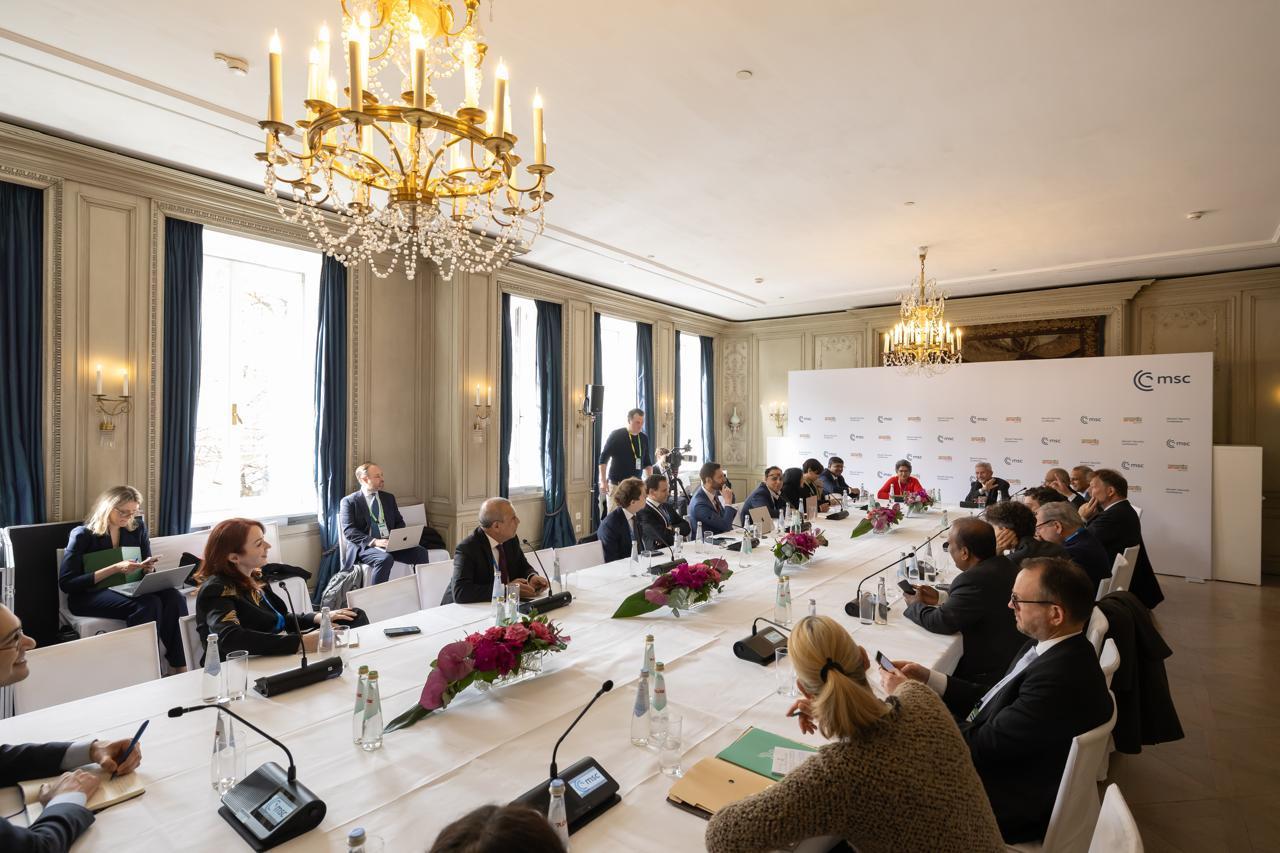
After Munich: A More Demanding Multipolarity
In the aftermath of the Munich Security Conference 2026, the global order is entering a more structured but contested phase. The United States is pursuing coalition-based systems across security and technology. Europe is emerging as a more coherent, if still cautious, strategic actor. China is deepening its parallel networks of influence. The Global South is increasingly assertive but remains fragmented.
For India, the implications are clear. The era of managing contradictions is giving way to an era of making choices. Multipolarity will not reduce pressure, it will redistribute it.
The metaphor of “multiple trapezes” from the roundtable, mentioned above, remains apt. But the challenge is no longer just to maintain balance. It is to decide which arcs to commit to and how to shape the trajectory of the system itself.