
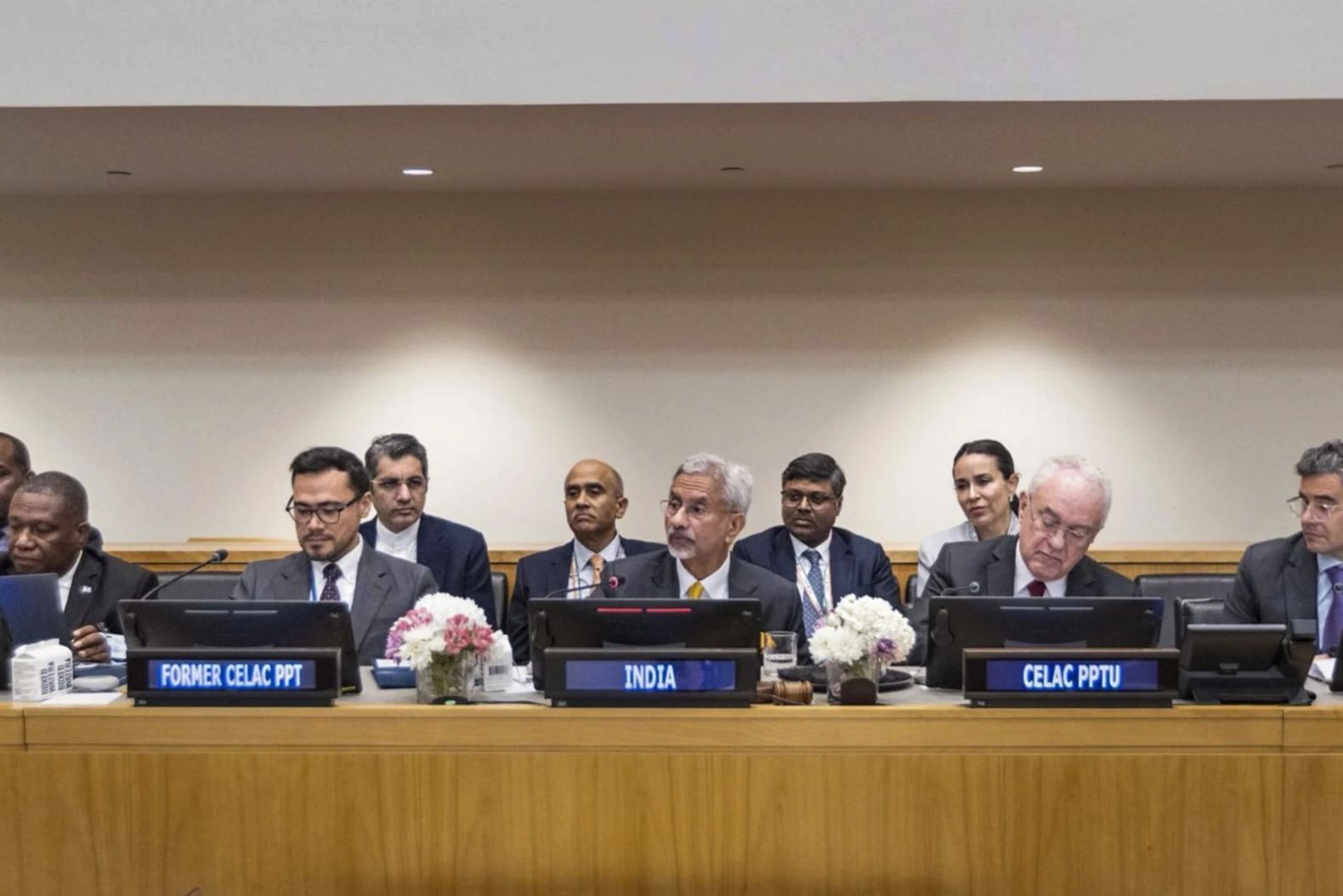
Figure 1: EAM Dr. S. Jaishankar at the India-Community of Latin American and Caribbean States (CELAC) Foreign Ministers’ Meeting
Source: https://ddnews.gov.in/en/india-sees-celac-as-an-important-partner-in-shaping-a-more-representative-global-order-eam-jaishankar/
“Negotiating with India is a fairly lengthy process.”
Rogers Valencia, Peru’s Minister for Trade, on the India-Peru FTA, 11 September 2026. Read more
Introduction
Welcome back to Southern Currents, Ananta’s newsletter on India-Latin America relations. Our previous edition ended on a question of follow-through. The three months, August to October, have given partial answers. Trade negotiations that looked stuck in July now have dates, protocols, and terms of reference, but none has reached the stage of signing. Oil and lithium, the two resources that first pulled India toward the region, moved in opposite directions: Venezuelan crude is reaching India at close to its highest rate in seven years, while India’s first overseas lithium project has slipped to 2030.
At the India-Community of Latin American and Caribbean States (CELAC) foreign ministers’ meeting in New York on 22 September, External Affairs Minister S. Jaishankar named three trade tracks: a Comprehensive Economic Partnership Agreement (CEPA) with Chile, a Free Trade Agreement (FTA) with Peru and an expanded Preferential Trade Agreement (PTA) with MERCOSUR. Mexico became a fourth trade track on 28 October. This edition covers all four, along with Venezuela’s oil trade and KABIL’s lithium project. It also covers the politics that now sits inside India’s trade calculus: Lula’s re-election in Brazil and the downgrade of Argentina-Brazil diplomatic relations.
We hope these analyses offer perspectives not readily available elsewhere. As always, we welcome your thoughts.
Venezuelan Crude Surges into India, but One Refinery Carries the Trade
What Happened?
Our previous edition asked if India’s talk of term contracts and upstream investment in Venezuela would turn into a licence. In mid-August, ONGC disclosed that its overseas arm, ONGC Videsh Limited (OVL), had secured a licence from the US Treasury’s Office of Foreign Assets Control (OFAC) to resume full operations in Venezuela. OVL holds 40% of the San Cristóbal oil project and 11% of Carabobo. ONGC expects new agreements and possibly the operatorship of some projects of Petróleos de Venezuela S.A. (PDVSA), the state oil company, and says the licence could help recover more than US$ 500 million in pending dividends. A company director said the risk of sanctions that had kept OVL cautious were now behind it.
Kpler estimates put Venezuelan deliveries to India at about 465,000 barrels per day in October, up from 196,000 in September, which would be the highest since December 2019. Kpler’s Sumit Ritolia expects the realised figure to land nearer 350,000 because some tankers will not discharge before month-end. Every Venezuelan cargo currently headed for India lists Sikka, the port that serves Reliance Industries’ Jamnagar complex. Russia’s share of India’s crude imports fell to about 35% in September from 56% in July.
On 20 and 21 October, US Secretary of State Marco Rubio visited Mumbai and then Jamnagar, skipping New Delhi. “We will talk with Reliance about refining more Venezuelan crude,” he told reporters. Kpler expects Reliance to account for 350,000 to 370,000 barrels per day of October’s intake, while Russian crude still made up about a third of Jamnagar’s feedstock between July and September.
Why does it Matter?
The upstream test from our previous edition has been met: OVL now has the US licence it lacked earlier. Whether that becomes operatorship and recovered dividends is still to be seen. The trade itself looks different from what we described in July, when state refiners were testing Venezuelan grades. By October, the volume is essentially for one private refinery with the capability to refine heavy, high-sulphur Merey crude. Ritolia’s note of caution is that not every Indian refinery can process this crude in large quantities, and higher tanker rates could limit the surge.
The second change is who is driving it. Al Jazeera describes Reliance as central to Washington’s efforts to penalise buyers of Russian energy and contain fuel prices ahead of the US midterm elections. India’s Venezuelan barrels are cheap, but they also depend on US licences and US priorities, which can shift faster than a refinery’s crude slate.
What to Look Out for?
Watch for a signed framework or operatorship at San Cristóbal, and for any movement on dividends. Watch if Indian Oil, Bharat Petroleum, and Hindustan Petroleum buy Venezuelan crude at scale or if Reliance remains the only buyer. And watch if October proves a peak: freight costs, heavy-crude limits, and any easing of pressure on Russian purchases could all pull volumes back.
Chile's CEPA misses October, but both Governments now Point to the Year-end
What Happened?
Our previous edition called October the date to watch for the Comprehensive Economic Partnership Agreement (CEPA). It passed without a deal. Chilean daily Emol reported on 23 October that Finance Minister Nirmala Sitharaman met former president Eduardo Frei, now Chile’s ambassador on special mission, with a Chilean delegation and officials from CAF, the Development Bank of Latin America and the Caribbean. They discussed an early conclusion of the CEPA and CAF financing for Indian companies’ projects, particularly in critical minerals and renewable energy. Nothing was signed, and according to the ANI report Emol cites, India’s finance ministry set no timeline.
Emol also reports that negotiations paused after Chile’s election and the inauguration of President José Antonio Kast in March, and resumed when Commerce Secretary Rajesh Agrawal travelled to Santiago in late August. India’s Commerce Ministry said afterwards that it remains committed to concluding the CEPA within this year. On 26 October, during a visit to the Netherlands, Goyal said Chile was “quite ripe for conclusion”.
Trade is moving faster than the talks. Chilean exports to India reached US$ 5.1 billion between January and September, almost double than a year earlier, according to Chile’s trade ministry data cited by Emol. Copper purchases rose 101%, and India has overtaken Brazil as the fifth-largest destination for Chilean copper.
Why does it Matter?
Our previous edition read Chile’s change of government as continuity. The reporting however says otherwise: the talks paused through the transition and resumed only after India sent its commerce secretary. That puts Chile’s experience closer to Peru’s than we suggested, and it shows how much of the pace comes from Delhi’s willingness to travel and push.
The reporting we found does not say that the dispute over wine, salmon, fruit, and gold which held up talks in June, has been settled. A year-end deal would still need compromises on those lines. Nor is it clear if the critical minerals chapter carries binding commitments. The trade data also explains India’s urgency: Chilean exports are rising far faster than Indian exports to Chile, which likely widens a deficit India already runs, mostly in copper.
What to Look Out for?
A concluded text by 31 December is now the test. Watch for a negotiating round or ministerial meeting scheduled before then, for any compromise on wine, salmon, and gold, and for a CAF-backed financing line that would give Indian firms a funding route into Chilean minerals.
Peru Puts a 2027 Date on FTA, with Gold doing the Heavy Lifting
What Happened?
Our previous edition ended on a freeze: on 4 July, Commerce Minister Piyush Goyal said the India-Peru FTA was unlikely to conclude soon, with Keiko Fujimori’s government yet to take office. Two months on, the picture has changed. On 11 September, Peru’s Minister for Trade, Rogers Valencia, told Reuters that Lima has sent India a counterproposal, that the talks are in their final stretch and that Peru hopes to sign the agreement in 2027.
The data behind Lima’s urgency is gold. Peruvian exports to India reached US$ 6.184 billion between January and July, up 152% over the same period of 2025, and India has overtaken the United States as Peru’s second-largest export destination, driven mainly by gold shipments. Exports to the US were US$ 5.971 billion, up 21%. Valencia also said he raised the new US tariffs issue with Secretary of State Rubio during his visit to Peru, and that they would weigh on Peruvian exports this year.
In New York on 22 September, Jaishankar again listed the FTA with Peru among the trade tracks India is pursuing in the region.
Why does it Matter?
Peru’s position moved from ‘stalled’ in July to ‘near-final’ in September, but the date moved too. Our previous edition reported a mid-2026 target; the new one is 2027. The counterproposal also puts the next move with India, and we found no public Indian response.
Gold explains both the momentum and the difficulty. The headline growth in trade is gold, while the strategic case for the deal, as our earlier editions described it, rested on copper, lithium, and other critical minerals. Any tariff concession on gold is likely to be the hardest part of the negotiation for New Delhi. Meanwhile, Peru has its own reason to close: higher US tariffs make India’s growing market more valuable. With Chile now described as ripe for conclusion, it looks likelier to be India’s first comprehensive agreement in the region.
What to Look Out for?
Watch for India’s response to Lima’s counterproposal, especially on gold and agricultural lines, for the scheduling of the next negotiating round, and for any sign that the 2027 timeline holds.
KABIL's Lithium Timeline Slips to 2030, though Drilling Continues
What Happened?
In August 2026, a parliamentary committee report on Khanij Bidesh India Limited (KABIL), the state-owned overseas minerals company, said lithium production from its five Catamarca blocks in Argentina is expected in four to five years, after completing feasibility work. According to ETV Bharat’s account of the report, production is now expected from December 2030, while a Ministry of Mines presentation had earlier targeted a feasibility study in December 2027 and production by the end of 2029. KABIL told the committee that the delays were due to a lack of expertise in lithium brine deposits. The panel also confirmed that KABIL’s lithium project in Mali, with a Rosatom subsidiary, is on hold and noted overall “limited progress” in securing overseas minerals assets.
Argentina is still offering more. Catamarca has offered KABIL seven additional blocks, which it is evaluating. On 24 August, at the fourth India-Argentina Joint Trade Committee in Buenos Aires, India’s Commerce Ministry said KABIL’s work in Catamarca had completed Phase II drilling and that further engagement in Salta and Jujuy provinces was being explored.
Why does it Matter?
Our previous edition presented the April environmental clearance as intent converting into action. The action is real: Phase II drilling is done. But the timeline we gave, production not before 2029, has moved back by about a year, and the reason KABIL itself gives is capability, not permits. That is the same execution gap our May edition highlighted.
With Mali on hold, Catamarca is the only project in this reporting where drilling has taken place. Argentina’s offers of seven more blocks, plus Salta and Jujuy, suggest that the constraint is increasingly KABIL’s capacity to execute, not access to acreage.
What to Look Out for?
Watch for Phase II drilling results and if the feasibility study keeps its December 2027 date, if KABIL accepts any of the seven new blocks, and if talks in Salta and Jujuy become signed agreements. A partner with brine expertise would be the clearest sign that KABIL is addressing the gap it has itself identified.
India and Mexico Sign Terms of Reference and Open Trade Talks
What Happened?
On 27 and 28 October, Commerce Secretary Rajesh Agrawal visited Mexico City where India and Mexico signed terms of reference that formally launched negotiations for a preferential trade agreement, the Commerce Department said. The terms had been finalised more than three months earlier and were waiting for a suitable date to sign it. Mexico was represented by Undersecretary of Foreign Trade Luis Rosendo Gutiérrez Romano on behalf of Economy Secretary Marcelo Ebrard. The text covers market access for goods, rules of origin, customs procedures and trade facilitation, dispute settlement, sanitary and technical standards, and trade remedies. Automotive, chemicals, electronics, pharmaceuticals, agri-food, energy, critical minerals, and medical devices are named as priority sectors.
India opened these talks after Mexico imposed tariffs of up to 50% on more than 1,400 products on partners without a trade agreement, India among them. Even so, India’s exports to Mexico rose about 26% in the current financial year through August; in 2025-2026 they were worth US$ 5.73 billion, nearly half of it comprising vehicles, auto components, and electrical machinery, with a trade surplus of US$ 3.63 billion. Days earlier, Goyal said Mexico is keen on an early-harvest agreement, meaning tariff cuts on selected goods before a full deal.
Why does it Matter?
Our previous edition noted that no negotiation was underway with Mexico. That has changed and four Latin American tracks are now live at once: Chile, Peru, MERCOSUR and Mexico. Mexico’s case is the most defensive. India’s largest exports there, vehicles and electrical machinery, are what the tariffs target; Reuters reported in December that they would hit about US$1 billion of Indian car exports.
The surplus is the likely pressure point. India sells to Mexico far more than it buys, and Mexico’s interest in an early harvest suggests it will look for quick access for its own exports. What India offers in return, and on which products, will shape any early-harvest list.
What to Look Out for?
Watch for the date of the first negotiating round, if an early-harvest list is exchanged, and if autos – the sector with the most at stake for both sides – are included.
Check These Out
Recommended further reading on the topics covered this edition
1. Peru awaits India response as trade talks near end, minister says (Reuters, via Yahoo Finance, September 11, 2026). The Peruvian trade minister’s account of the counterproposal, the 2027 target and India’s rise as a gold destination. Read here
2. Why Rubio is visiting Reliance’s oil refinery in India, the world’s largest (Al Jazeera Explainer, October 20, 2026). How Jamnagar sits at the centre of US efforts on Russian and Venezuelan oil. Read here
3. India’s Venezuelan oil imports set to hit seven-year high as Russian crude gets costlier (Business Today, citing Bloomberg, updated October 7, 2026). The Kpler numbers behind the October surge, and the limits on heavy crude. Read here
4. Frei se despliega en India y se reúne con ministra de Finanzas para un “pronto” cierre del acuerdo comercial con Chile (Emol, October 23, 2026 [in Spanish]). The fullest account of the Chilean side of the CEPA talks, including trade data. Read here
5. India, Mexico formally begin preferential trade agreement negotiations (Business Standard, October 28, 2026). The scope of the terms of reference and the trade figures behind them. Read here
6. Brazil’s left-wing President Lula elected for fourth term (NPR, October 25, 2026). A clear account of the runoff and what it means for Brazil’s foreign policy. Read here
Conclusion
Taken together, the three months (August – October) show India’s Latin American trade agenda gaining structure without yet delivering outcomes. Four tracks are now live, and each has a document or a date: terms of reference with Mexico, a counterproposal from Peru, an expansion launch with MERCOSUR, and a year-end aspiration for Chile. None has a signature yet. The resource side is less tidy. Venezuelan oil is arriving at a rate not seen since 2019 and through one refinery and under US licences, while KABIL’s lithium has a drilling programme and a later date.
The politics have also moved closer to the trade. Washington’s interest in Venezuelan crude, Lula’s re-election, and the downgraded Argentina-Brazil relations all have a bearing on how fast these talks can move. The test we set in the previous edition still applies: follow-through. This time it can be measured in specific places: a Chilean text by 31 December, India’s answer to Peru, the first MERCOSUR round, and the first round with Mexico.
Thank you for reading this edition of Southern Currents. We look forward to continuing this analysis in the months ahead.