Introduction
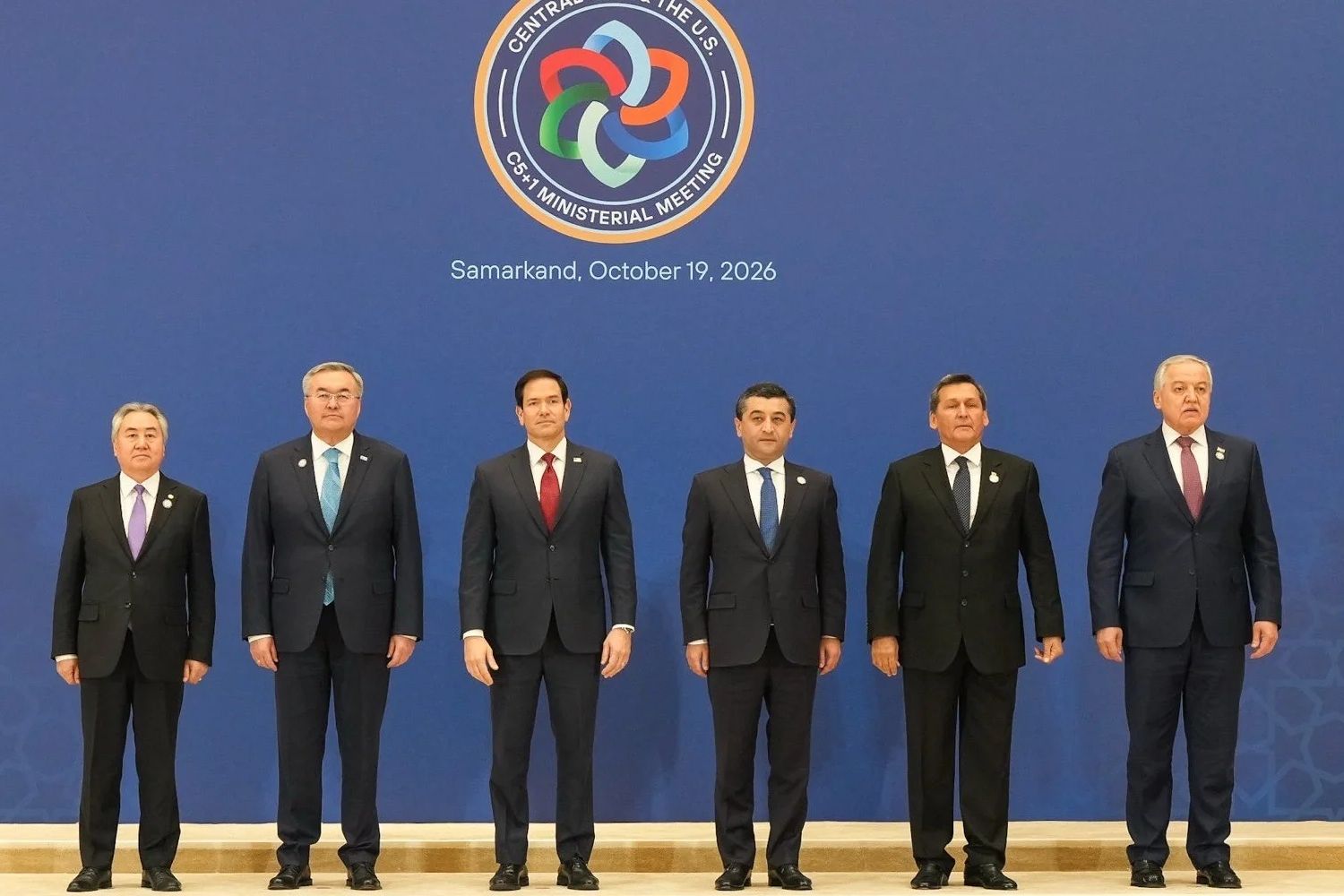
The congregation of U.S. Secretary of State Marco Rubio and the foreign ministers of Kazakhstan, Kyrgyzstan, Tajikistan, Turkmenistan, and Uzbekistan for the C5+1 ministerial summit in Samarkand represents a pivotal moment in Central Asian diplomacy. Accompanied by a commercial delegation of over 200 U.S. business leaders, Rubio’s visit signals a renewed push by Washington to establish a durable strategic footprint in Eurasia.
However, against the backdrop of deep-seated Russian security influence and overwhelming Chinese economic hegemony, the key question remains: Is the United States equipped to present a credible alternative in Central Asia, or is this another episode in a long history of ad hoc, spasmodic American engagement?
The Historical Legacy: From Neglect to "Transactional Realism"
American policy toward Central Asia after 1991 was defined by cycles of intense focus followed by prolonged neglect:
- Post-1991: Washington viewed the region primarily through the prisms of nuclear non-proliferation (dismantling Kazakhstan’s post-Soviet nuclear arsenal) and energy development in the Caspian Basin.
- Post-9/11: The region became an indispensable logistical backstop for the War in Afghanistan, hosting major airbases such as Karshi-Khanabad in Uzbekistan and Manas in Kyrgyzstan.
- Post-2021: Following the military withdrawal from Kabul, American interest dropped precipitously, reinforcing local perceptions that Washington treats Central Asia as a temporary convenience rather than a long-term partner.
The C5+1 framework, inaugurated in 2015, was created to provide a structured, multilateral counterweight. Yet, for much of its first decade, it suffered from modest budgets and a lack of high-level political backing.
Secretary Rubio’s presence in Samarkand—framing the initiative around commercial partnerships, private sector capital, and critical supply chain integration—signals an evolution toward “transactional realism.” Rather than preaching governance or institutional reform, the current U.S. posture focuses on trade deals, investment guarantees, and resource corridors.
Key Pillars of Engagement: Minerals, Energy, and Market Access
The Samarkand agenda centers on three key economic vectors where American technology and capital directly align with Central Asia’s diversification goals:
1. Critical Minerals and Supply Chain Security
Central Asia holds vast, largely untapped reserves of lithium, cobalt, rare earth elements, copper, and titanium—materials vital for global technology supply chains, clean energy transition, and defense manufacturing.
Currently, China controls the processing capacity for most of these minerals globally. Through initiatives like the Minerals Security Partnership (MSP), Washington seeks to fund extraction, processing, and refining facilities directly within Central Asia. The goal is two-fold:
- Provide local governments with higher value-added industries rather than raw resource exports.
- Secure non-Chinese supply lines for critical technology components.
2. Energy Cooperation and Infrastructure Resilience
While Kazakhstan and Turkmenistan, and to an extent Uzbekistan, possess immense oil and gas reserves, their traditional export routes pass directly through Russian pipelines (such as the Caspian Pipeline Consortium) or lead east to China.
Washington is prioritizing support for the Trans-Caspian International Transport Route (the “Middle Corridor”). This multimodal logistics network bypasses both Russia and Iran, connecting Central Asian markets to Europe via the Caspian Sea, Azerbaijan, Georgia, and Turkey. U.S. participation focuses on modernizing port infrastructure, digitalizing customs systems, and providing financing through the U.S. International Development Finance Corporation (DFC).
3. Market Access and Technology Transfer
Central Asian economies are landlocked and seek to escape economic over-dependence on Moscow and Beijing. The inclusion of over 200 U.S. corporate executives in Samarkand points to targeted efforts in:
- Agriculture and water management systems to address regional climate pressures.
- Telecom infrastructure and cloud computing, offering non-Chinese digital alternatives.
- Capital markets integration, leveraging American equity to back local infrastructure projects.
Russia and China: The Entrenched Dual Hegemony
To determine whether the United States can challenge Russia and China in Central Asia, one must analyze the distinct ways Moscow and Beijing exert control over the region.
Russia: The Security Anchor and Migration Magnet
Despite being bogged down by its war in Ukraine and facing reduced geopolitical bandwidth, Moscow retains deep systemic advantages:
- Security & Military: Through the Collective Security Treaty Organization (CSTO) and bilateral military bases in Tajikistan and Kyrgyzstan, Russia remains the primary security guarantor in times of domestic or regional crisis.
- Labor & Remittances: Millions of Central Asian migrant workers (particularly from Tajikistan, Kyrgyzstan, and Uzbekistan) work in Russia. Their remittances account for a significant portion of their home countries’ GDP, giving Moscow immediate socio-economic leverage.
- Shared History and Language: Russian remains the Lingua Franca of business and diplomacy across much of the region, creating a low barrier for political influence.
China: The Financial Powerhouse and Industrial Driver
China’s footprint in Central Asia is overwhelmingly economic, acting as the ultimate financier and infrastructure developer:
- The Belt and Road Initiative (BRI): Central Asia is the geographical centerpiece of China’s overland connectivity to Europe. Beijing has poured billions into roads, railways, energy pipelines, and industrial parks across the five states and more.
- Dominant Trade Partner: China has bypassed Russia to become the single largest trading partner for most Central Asian nations, supplying processed goods while absorbing raw materials and natural gas.
Can the U.S. Challenge Russia and China?
The short answer is no, but it doesn’t have to.
The United States cannot outspend China’s state-backed infrastructure loans, nor can it replace Russia’s role as a geographic security provider and labor market. Central Asia’s geographic reality—landlocked between nuclear-armed giants—dictates that Moscow and Beijing will always remain primary regional actors.
However, Washington can provide what Central Asian capitals crave most: strategic balance and options.
Central Asian leaders practice a policy of “multi-vector diplomacy.” They do not want to become vassal states to Beijing or be dragged down by Moscow’s international isolation. A sustained U.S. presence gives countries like Kazakhstan and Uzbekistan the leverage they need to negotiate better terms with both China and Russia. By offering high-quality investments, transparent financing, technology transfers, and Western market access, the U.S. functions as an essential structural counterweight.
Ad Hoc or Sustained? The Structural Test Facing U.S. Policy
The primary concern among Central Asian policymakers is not American intent, but American sustainability. Historical track record gives them reason to be cautious:
To break this pattern and convince Central Asian states that Washington’s engagement is durable and long-term, U.S. policy must overcome three key structural vulnerabilities:
- The Bureaucratic Vacuum: U.S. attention frequently drifts toward immediate geopolitical crises in Eastern Europe, the Middle East, or the Indo-Pacific. Without an institutionalized framework that locks in long-term funding, initiatives risk stalling when political focus shifts.
- Private Capital vs. State Capital: Western engagement relies on private enterprise, which evaluates risk based on commercial returns, institutional stability, and rule of law. Unlike Chinese state-owned enterprises or Russian state monopolies, American firms cannot be commanded by the State Department to invest in risky terrain unless the economic parameters align.
- Geographic and Logistical Reality: The lack of direct sea access or friendly neighboring transit routes makes physical trade complex. Sanctions on Russia and Iran complicate overland freight, making Western investments heavily dependent on the success of the Middle Corridor.
The Road Ahead: The Future of C5+1
The Samarkand C5+1 ministerial summit highlights that Central Asia is no longer a peripheral node in global strategy. It has become a key arena for regional diversification and resource competition.
If the U.S. aims to move beyond “spasmodic” engagement, it must execute a multi-pronged strategy:
- Focus on Quality over Quantity: Rather than competing dollar-for-dollar with Beijing, the U.S. should emphasize high-standard projects, ESG-compliant mining standards, workforce training, and technology transfers that build local capacity.
- Commit to the Middle Corridor: Active participation in financing logistics, green energy, and transit infrastructure across the Caspian route will give Central Asia viable alternatives to Russian transit routes.
- Institutionalize Economic Diplomatic Channels: Transforming the C5+1 from an episodic ministerial meeting into a permanent, operational framework—complete with dedicated trade councils, investment platforms, and working groups—will demonstrate that U.S. interest extends beyond short-term tactical goals.
- Continued high level political engagement: So far no US President has visited Central Asia since their independence in 1991. Under the evolving circumstances this could be given positive consideration in the coming months.
- Collaborating with friendly partners: The US could engage Central Asia in partnership with friendly and like-minded political and economic collaborators like EU, Japan, India to provide greater traction to their efforts.
The United States will not replace Russia or China in Central Asia, nor is that a realistic policy goal. Instead, success will be measured by whether Washington can establish itself as an integral, enduring option in the region’s multi-vector balance—providing Central Asian states with the economic and strategic room to maneuver independently.