
As geopolitical tensions mount, ongoing global conflicts have cradled battlefield innovation. Ananta’s Command Chain reviews the security and defence-centric developments that are shaping warfare’s evolution. In this edition we analyse the relevance of India’s constant military exercises with partner countries, the implications of China getting its hands on the US’s F-35 parts, India’s hunt for a standard assault rifle, the new US-Greenland-Denmark security pact, and how the Indian Air Force’s PGM inventory came to be.
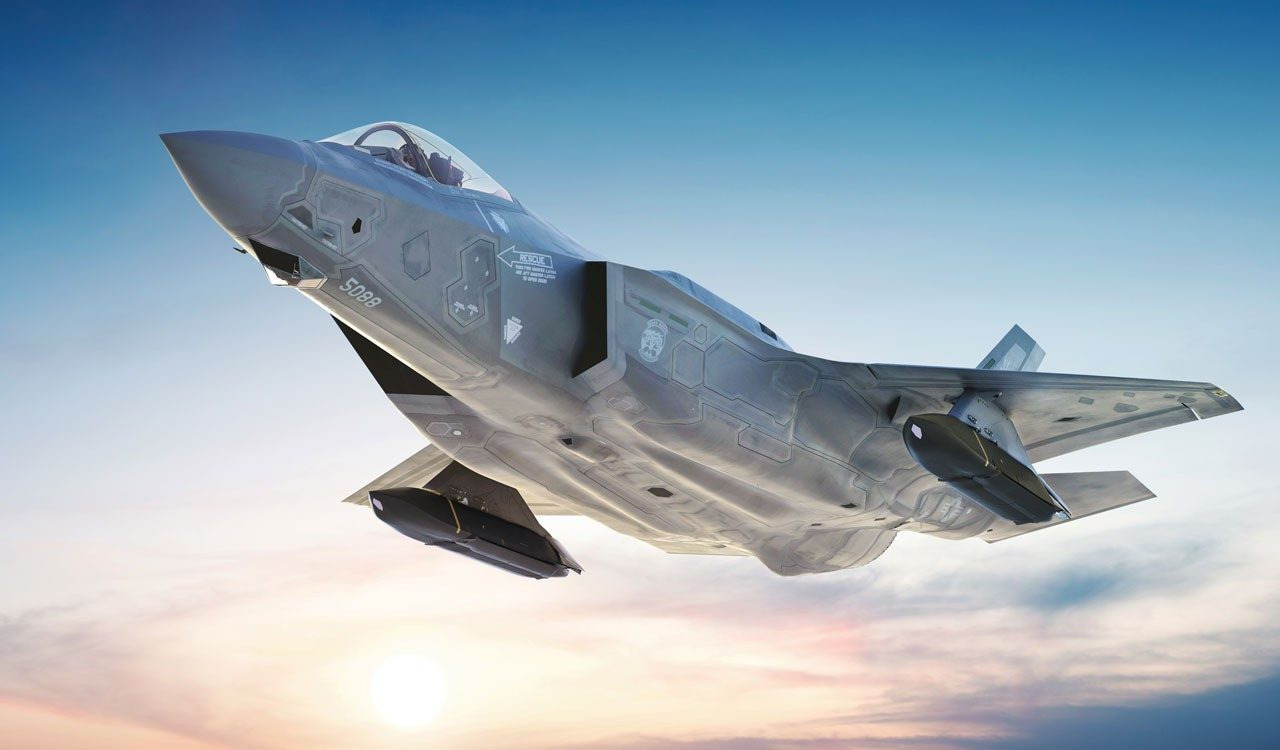
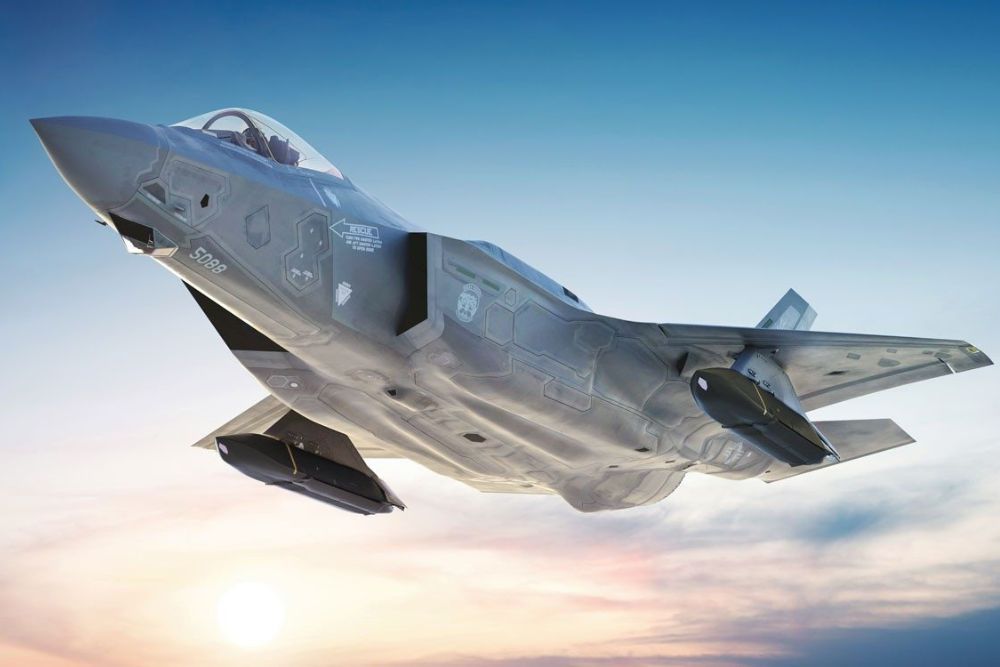
An F-35
Source: Lockheed Martin
India’s military exercises and their relevance to its defence and security partnerships
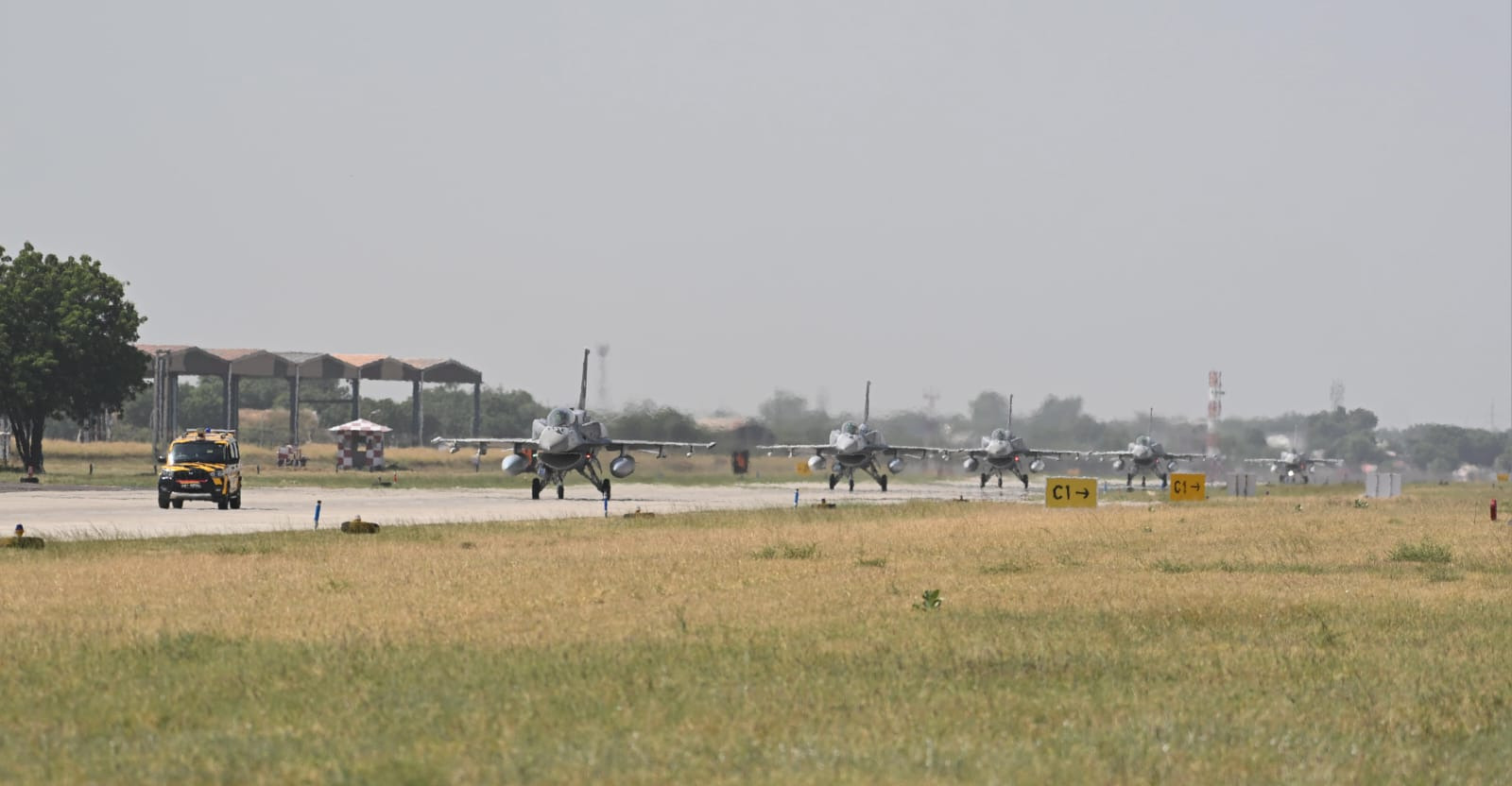
India has always pursued military diplomacy as a tool of statecraft, and the latest US-India bilateral exercise Yudh Abhyas as well as the multilateral Tarang Shakti in September 2026 are the latest examples. According to an official statement from India. the 2026 edition of Tarang Shakti is operationally especially significant as “the foreign aircraft taking part include the F-35 Lightning II, Rafale, F-16, A400M, MRTT, C-130, C-130J and KC-30A, bringing together a diverse mix of combat, airlift and air-to-air refuelling capabilities”. The exercise is the first instance of the US’s latest fifth-generation stealth fighter aircraft, the Lockheed Martin F-35 Lightning II, ever participating in drills with Indian forces on Indian soil.
India maintains security and strategic ties with not only like-minded nations in its immediate geography but also in other regions of the world where its interest either lay directly, or can be affected by those partner nations or their actions and interests. Furthermore, New Delhi tries to maintain a constant stream of bilateral and multilateral exchanges so that India can periodically keep its forces in touch with partners overseas, especially so that there are no glaring differences in situations where interoperability may be critical. While these exercises are an opportunity to professionally observe other professional forces, the bigger advantage is the knowledge sharing and cooperation that takes place on the sidelines.
Table 1 Major Bilateral Exercises
| Country | Exercise Name | Service / Focus | Frequency |
|---|---|---|---|
| US | Yudh Abhyas | Army (Land Warfare) | Annual |
| US | Vajra Prahar | Special Forces | Annual |
| US | Tiger Triumph | Tri-Service (Amphibious / HADR) | Annual |
| France | Varuna | Navy | Annual |
| France | Garuda | Air Force | Biennial |
| France | Shakti | Army | Biennial |
| Japan | Dharma Guardian | Army | Annual |
| Japan | Veer Guardian | Air Force (Combat) | Biennial |
| Japan | JIMEX | Navy | Annual |
| Australia | Austra Hind | Army | Annual |
| Australia | AUSINDEX | Navy | Biennial |
| Russia | INDRA | Tri-Service | Biennial |
Table 2 Major Multilateral Exercises
| Exercise Name | Primary Service | Participating Nations / Scope | Frequency |
|---|---|---|---|
| Malabar | Navy | Quad nations (India, US, Japan, Australia) | Annual |
| MILAN | Navy | Hosted by India; 40+ friendly navies | Biennial |
| Tarang Shakti | Air Force | Hosted by India; multi-national air exercise | Biennial |
Pentagon investigates after China obtains parts from F-35 stealth fighter jet
According to a report by Bloomberg, China may have been able to get its hands on parts from the US’s fifth-generation stealth fighter aircraft, the Lockheed Martin F-35 Lightning II. Reportedly, the Pentagon’s Joint Programme Office (JPO) has acknowledged that the issue pertains to unserviceable parts and that an investigation is underway. The Bloomberg report names a cockpit canopy and a weapons bay door that can be fitted onto a F-35, and characterising them as “sensitive”. While the Chinese authorities have not acknowledged that they or their regional government in Hong Kong has taken possession of the parts. According to a report by the Straits Times, the US House Armed Services Committee is looking into the matter as well.
Even if true, this single instance of logistics failure is unlikely to be a major leak for Western stealth aircraft technologies since China already has more than a few stealth aircraft of its own and understands the materials and basic components like the canopy and bomb bay doors which, while proprietary, are unlikely to be so advanced that no other nation has been able to manufacture their own versions of stealth fighter aircraft with comparable specifications.
India’s decades long hunt for a standardised assault rifle that is unlikely to ever end
The Indian Army, which is the second largest ground force in the world after the Chinese People’s Liberation Army, has been searching for a standard assault rifle for its infantry troops for over three decades. While previous attempts such as the Indian Small Arms System (INSAS) in the 1990s was custom made for the requirements of the Indian military indigenously by the Defence Research and Development Organisation (DRDO), it had early reliability issues but when it worked and was refined in successive iterations and batches, it became one of the most stable and accurate weapons albeit out of date. The Indian Army’s biggest challenge is perhaps the unit cost, as is evident from the phased manner in which rifles, beginning with the SIG Sauer SIG 716, were acquired first as a batch of 72,400 in 2019 and then 73,000 in 2024.
These SIG 716 rifles were likely meant to equip the frontline troops and not formations in the interiors of the country who are either continuing with the still serviceable INSAS or the newer licensed AK-203 now being produced. Thus a two-tier system in various armouries is probably already in place and which suits the prevailing order and doctrine by which India’s ground forces choose to make the best use of their allocated funds from the defence budget.
For India’s military planners likely thinking from threat counter and effectiveness against it perspective and not from a long term sustainability and familiarity perspective this approach makes sense. However there will also be shortcomings such as the time the soldiers handling these weapons will have with them will not be a constant, as they may get rotated out of the frontlines and into the interior and another unit may take over from them which will also include the weapons meant for that specific theater and role.
When militaries such as the US’s introduce a standardised weapon into its ranks the idea to ensure every service member becomes familiar with it as a rifleman straight from basic training after recruitment, however this paradigm may not translate exactly into India’s own recruitment and training pipeline, which itself has taken on a new paradigm with the Agniveer programme, whereby Indian armed forces are mainly recruiting for four years across ranks and then retaining only 25% of the recruits after their four years of service is completed. However, according to a report by Hindustan Times, the armed services are proposing that the retention rate be increased substantially. Purportedly the Navy is asking for 75% of the recruits to be retained, and the Army and Air Force are seeking 50% to be retained, this will also further affect the distribution of resources, including assault rifles as much of the funds will continue to go towards personnel cost.
The US-Greenland-Denmark security deal
The US, Denmark and the autonomous territory of Greenland under Denmark, signed a security agreement on 22 September 2026. According to the text of the agreement, it is a permanent standing instrument without an end date. The incumbent US President Donald Trump and his administration had been creating friction with many of their Western allies as they made repeated statements about the US taking Greenland for securing its presence in the Arctic region for reasons of national security.
While the US already had a good security and strategic partnership with Denmark and a military based in Greenland, the outright intent to take over the sovereign territory of an allied country didn’t convey a favourable message for the US’s image of being a benevolent partner for countries under its security alliance structures like the North Atlantic Treaty Organisation (NATO) and the Five Eyes intelligence alliance. Trump had been making these statements ever since his inauguration for his second term in office in 2025, and at the time Denmark and Greenland’s respective governments had rejected handing over the territory to the US even if it tried to seize it by force. However, the Danish leaders were ready to discuss expanding the scope of their security cooperation with the US for mutual benefit.
After nearly two years of the rhetoric, an agreement has purportedly resolved the issue, as it apparently satisfies all three parties involved. The US gets two new military bases in Greenland as well as rights to station and operate military assets in its airspace, subsurface, surface, and landing rights too. The pact also states that since Greenland is autonomous and can technically secede from Denmark, it will still continue to have NATO membership thus binding itself to the US security alliance structure even if a new application for membership is required. The text also speaks of Greenland making sure no businesses controlled or funded by states adversarial to the Western bloc’s interests manage to secure any strategic assets or capabilities via investment on its territory.
Precision Guided Bombs and the Indian Airforce
During combat operations in the 1999 Kargil war, the Indian Air Force (IAF) was instructed to not cross the Line of Control (LoC) thus making its role much more centred around ground attacks than air defence or air-to-air combat. Ground attacks which were till the last decade mostly dominated by munitions that relied solely on gravity and the skill of the aviator aiming their release from his aircraft, was quickly being replaced with much more efficient Laser Guided Bombs (LGB) and other Precision Guided Munitions (PGM).
For India, the operational need for avoiding the enemy’s Man Portable Air Defence (MANPAD) missiles and staying above at least 30,000 feet while targeting tiny sangars situated on occupied peaks was an optimal task only for the then brand new Dassault Mirage 2000 and the laser guided bombs they were ultimately able to drop after extensive field modifications. The success of the ground strikes by the Mirage 2000 led to not only long-term doctrinal changes but also a sense of operational focus being built around PGM capabilities to be available from the very outset in any future conflict. To this end, the IAF not only was interested in acquiring a stockpile of PGMs from abroad but also indigenous alternatives to them. The Mirage 2000 fleet was in successive decades equipped with Spice-2000 and Spice-250 PGM kits, followed by the SU-30MKI with Russian origin KAB-500 and KAB-1500, and the newly acquired Dassault Rafales which also came with HAMMER PGMs. However the exact inventory numbers have not been made public either by the Ministry of Defence or the IAF. Furthermore, the indigenous Bharat Dynamics Limited (BDL) developed Smart Anti-Airfield Weapon (SAAW) was also ordered by the IAF in a 160 units batch in September 2026.
Precision Guided Bombs and the Indian Airforce
John R. Hoehn. (2021, June 11). Precision-Guided Munitions: Background and Issues for Congress. EveryCRSReport.com. https://www.everycrsreport.com/reports/R45996.html
Oliver O'Connell,Max MatzaandAdrienne Murray,Copenhagen. (2026, September 19). Nato welcomes Greenland deal as Trump says it will give US 'permanent security control’. BBC. https://www.bbc.com/news/articles/c63d7lexyym1o
Justin Bronk. (2026, September 23). Options for a NATO Multinational Drone-Interception Squadron. RUSI. https://www.rusi.org/explore-our-research/publications/commentary/options-nato-multinational-drone-interception-squadron
Sidharth Kaushal and John Louth. (2026, January 27). Prototype Warfare in the Maritime Domain: Opportunities and Approaches. RUSI. https://www.rusi.org/explore-our-research/publications/research-papers/prototype-warfare-maritime-domain-opportunities-and-approaches
Chung Min Lee. (2025). South Korea as a Rising Defence Exporter: Challenges and Opportunities. IISS. https://www.iiss.org/research-paper/2025/12/south-korea-as-a-rising-defence-exporter-challenges-and-opportunities/
